
Overview
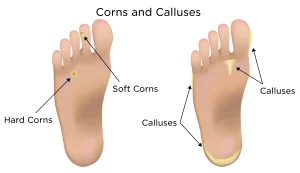
Corns and calluses are thickened areas of skin that develop as a protective response to repeated friction, pressure, or irritation. They most commonly form on the feet, especially on toes, soles, and areas that bear weight. While generally not serious, corns and calluses can cause discomfort or pain, particularly when pressure continues.
Symptoms
The appearance and symptoms of corns and calluses may vary, but commonly include:
-
Thick, hardened layers of skin
-
Rough or dry skin texture
-
Raised, hardened bumps on the feet or hands
-
Pain or tenderness under the skin, especially with corns
-
Yellowish or grayish discoloration of the affected area
-
Reduced sensitivity in the thickened skin
Causes
Corns and calluses form when the skin repeatedly experiences friction or pressure. This commonly results from wearing ill-fitting shoes, walking barefoot, or abnormal foot mechanics. Activities that place repeated stress on certain areas of the skin can also contribute. Corns tend to form on non–weight-bearing areas, while calluses usually develop on weight-bearing surfaces.
Risk Factors
Several factors increase the likelihood of developing corns and calluses:
-
Wearing tight, loose, or high-heeled shoes
-
Foot deformities such as bunions or hammertoes
-
Prolonged standing or walking
-
Walking barefoot frequently
-
Use of hand tools or repetitive manual activities
-
Conditions that affect foot sensation, such as diabetes
Complications
Although usually harmless, corns and calluses can lead to complications if not properly managed:
-
Pain that interferes with walking or daily activities
-
Skin breakdown or ulcer formation, especially in people with diabetes
-
Infection if the skin cracks or is improperly trimmed
-
Bleeding or inflammation
-
Recurrence if pressure or friction continues
Prevention
Preventive measures help reduce the formation of corns and calluses:
-
Wearing properly fitting, cushioned footwear
-
Using protective pads or insoles to reduce pressure
-
Keeping feet clean and moisturized
-
Avoiding walking barefoot on hard surfaces
-
Addressing foot deformities with appropriate medical care
-
Regular foot care and inspection, especially for individuals with reduced sensation
Request an appointment
Advertisement
