
Overview
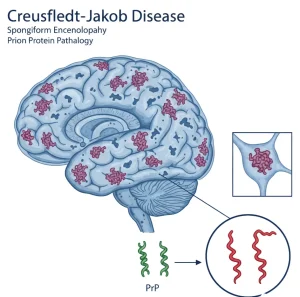
Creutzfeldt-Jakob disease is a rare, rapidly progressive neurodegenerative disorder caused by abnormal proteins known as prions. These misfolded proteins lead to severe damage of brain tissue, resulting in a sponge-like appearance of the brain. Creutzfeldt-Jakob disease progresses quickly and is always fatal, often leading to death within months to a year after symptoms begin. The condition affects adults worldwide and occurs in several forms, including sporadic, inherited, and acquired types.
Symptoms
Symptoms of Creutzfeldt-Jakob disease typically worsen rapidly over a short period of time.
Common symptoms include:
-
Rapidly progressive dementia
-
Memory loss and confusion
-
Personality and behavior changes
-
Difficulty with coordination and balance
-
Muscle stiffness or jerking movements
-
Vision disturbances
-
Slurred speech
-
Weakness or fatigue
-
Difficulty swallowing in later stages
As the disease advances, patients often lose the ability to move, speak, or care for themselves.
Causes
Creutzfeldt-Jakob disease is caused by prions, which are infectious, misfolded proteins that trigger normal proteins in the brain to also misfold.
Types of causes include:
-
Sporadic cases with no identifiable cause
-
Inherited genetic mutations affecting the prion protein gene
-
Acquired exposure through contaminated medical instruments or transplanted tissues
-
Variant forms linked to consumption of contaminated animal products
Prions are resistant to standard sterilization methods and lead to irreversible brain damage.
Risk factors
Although Creutzfeldt-Jakob disease is rare, certain factors may increase risk depending on the type.
Risk factors include:
-
Increasing age, most commonly between 50 and 75 years
-
Family history of inherited prion disease
-
Specific genetic mutations
-
Exposure to contaminated surgical instruments or biological materials
-
Consumption of contaminated food products in variant forms
Most cases occur sporadically without known risk factors.
Complications
Creutzfeldt-Jakob disease leads to severe neurological decline and life-threatening complications.
Possible complications include:
-
Complete loss of cognitive function
-
Inability to walk or communicate
-
Recurrent infections such as pneumonia
-
Difficulty swallowing leading to aspiration
-
Coma and death
The disease course is aggressive, and supportive care is the primary approach.
Prevention
There is no way to prevent sporadic or inherited Creutzfeldt-Jakob disease, but measures can reduce the risk of acquired forms.
Preventive strategies include:
-
Strict infection control and sterilization procedures in healthcare settings
-
Careful screening of organ and tissue donors
-
Avoidance of high-risk animal products in affected regions
-
Adherence to public health guidelines for food safety
-
Genetic counseling for families with inherited forms
Early recognition allows for appropriate care planning and infection control, although it does not change the disease outcome.
Advertisement
