
Overview
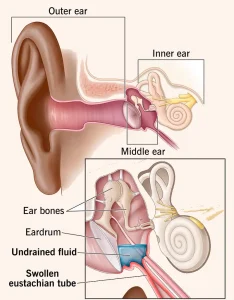
A middle ear infection, also known as otitis media, is an infection of the air-filled space behind the eardrum that contains the tiny vibrating bones of the ear. It is one of the most common illnesses in children, though adults can also be affected. Middle ear infections often develop after a cold, flu, or other upper respiratory infection.
The condition occurs when fluid builds up behind the eardrum and becomes infected by bacteria or viruses. This buildup can cause pain, pressure, and temporary hearing problems. Many middle ear infections improve on their own, but some require medical treatment to prevent complications.
Symptoms
Symptoms of a middle ear infection can vary depending on age and the severity of the infection. In children, symptoms may be harder to recognize.
Common symptoms include:
-
Ear pain, especially when lying down
-
A feeling of pressure or fullness in the ear
-
Difficulty hearing or muffled hearing
-
Fluid draining from the ear
-
Fever
-
Headache
-
Trouble sleeping
-
Loss of balance
In infants and young children, signs may include ear pulling, increased crying, irritability, difficulty feeding, or poor response to sounds.
Causes
Middle ear infections are usually caused by bacteria or viruses that enter the middle ear. These infections often begin after a respiratory illness that leads to swelling and congestion of the nasal passages, throat, and eustachian tubes.
The eustachian tubes connect the middle ear to the back of the throat and help drain fluid. When these tubes become blocked due to inflammation, fluid can build up in the middle ear. This trapped fluid creates an environment where germs can grow and cause infection.
Colds, sinus infections, allergies, and exposure to tobacco smoke can all increase the likelihood of developing a middle ear infection.
Risk factors
Several factors can increase the risk of middle ear infections:
-
Young age, especially children between 6 months and 2 years
-
Exposure to group settings such as daycare
-
Frequent upper respiratory infections
-
Bottle-feeding while lying down
-
Exposure to secondhand smoke
-
Seasonal factors, with higher risk during fall and winter
-
Allergies that cause nasal congestion
-
Family history of ear infections
These factors can affect how well the eustachian tubes function and how easily infections develop.
Complications
Most middle ear infections resolve without lasting problems, but repeated or severe infections can lead to complications.
Possible complications include:
-
Temporary or permanent hearing loss
-
Delayed speech or language development in children
-
Spread of infection to nearby tissues, such as the mastoid bone
-
A torn eardrum
-
Balance problems
Prompt treatment and follow-up care can help reduce the risk of long-term complications.
Prevention
While not all middle ear infections can be prevented, certain steps may lower the risk:
-
Washing hands regularly to reduce the spread of infections
-
Keeping vaccinations up to date, including flu and pneumococcal vaccines
-
Avoiding exposure to secondhand smoke
-
Breastfeeding infants when possible
-
Feeding babies in an upright position
-
Managing allergies effectively
-
Reducing exposure to sick individuals when possible
These measures can help protect against infections that commonly lead to middle ear problems.
Advertisement
