
Overview
Eating disorders are serious mental health conditions marked by persistent disturbances in eating behaviors, thoughts, and emotions related to food, body weight, and body image. These disorders can affect people of any age, gender, or background and often involve unhealthy patterns such as extreme food restriction, binge eating, purging behaviors, or an intense fear of gaining weight. Eating disorders can significantly impact physical health, emotional well-being, and daily functioning, and they require timely medical and psychological care.
Symptoms
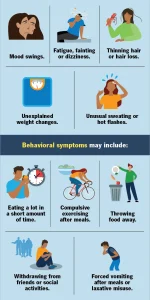
Symptoms of eating disorders vary depending on the specific type but generally involve changes in eating habits, weight, and mental health. Common signs include:
-
Preoccupation with food, calories, weight, or body shape
-
Skipping meals, eating very small portions, or rigid food rules
-
Episodes of binge eating or loss of control while eating
-
Compensatory behaviors such as vomiting, excessive exercise, or misuse of laxatives
-
Noticeable weight loss, weight gain, or fluctuations
-
Fatigue, dizziness, hair thinning, or feeling cold frequently
-
Mood changes, anxiety, depression, or social withdrawal
Causes
Eating disorders develop from a complex interaction of biological, psychological, and environmental factors rather than a single cause. These may include:
-
Genetic predisposition and family history of eating disorders or mental health conditions
-
Imbalances in brain chemicals that regulate mood and appetite
-
Low self-esteem, perfectionism, or difficulty coping with emotions
-
Cultural and societal pressure to meet certain body ideals
-
Trauma, bullying, or stressful life events
Risk Factors
Certain factors may increase the likelihood of developing an eating disorder, including:
-
Adolescence or young adulthood, though they can occur at any age
-
Family history of eating disorders, anxiety, or depression
-
Participation in activities emphasizing weight or appearance
-
History of dieting or significant weight-focused criticism
-
Coexisting mental health conditions such as anxiety or obsessive-compulsive traits
Complications
If left untreated, eating disorders can lead to serious and potentially life-threatening complications affecting multiple body systems. Possible complications include:
-
Malnutrition and electrolyte imbalances
-
Heart rhythm problems and low blood pressure
-
Digestive issues and damage to the teeth or esophagus
-
Hormonal disturbances and fertility problems
-
Weakened bones and increased fracture risk
-
Increased risk of self-harm or suicide
Prevention
While not all eating disorders can be prevented, certain strategies may help reduce risk and support early intervention:
-
Promoting healthy attitudes toward food, weight, and body image
-
Encouraging open conversations about mental health and emotions
-
Avoiding extreme dieting and weight-focused messaging
-
Identifying early warning signs and seeking professional help promptly
-
Supporting positive coping skills and self-esteem, especially in children and adolescents
Early recognition and comprehensive treatment can greatly improve outcomes for individuals with eating disorders.
Advertisement
