
Overview
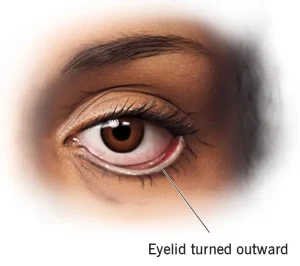
Ectropion is a condition in which the lower eyelid turns outward and away from the eye, exposing the inner eyelid surface. This abnormal position prevents the eyelid from properly protecting the eye and distributing tears, leading to dryness, irritation, and increased risk of infection. Ectropion most commonly affects older adults but can occur at any age depending on the underlying cause.
Symptoms
Symptoms of ectropion are mainly related to eye irritation and tear drainage problems. Common symptoms include:
-
Excessive tearing or watery eyes
-
Dryness, redness, or irritation of the eye
-
Feeling of grit or a foreign body in the eye
-
Sensitivity to light and wind
-
Thickened or crusty discharge around the eyelids
-
Blurred vision in severe or prolonged cases
Causes
Ectropion occurs when the muscles and tissues supporting the eyelid weaken or are damaged. Possible causes include:
-
Age-related loosening of eyelid muscles and skin
-
Facial nerve paralysis affecting eyelid control
-
Scarring from injury, burns, or previous eye surgery
-
Congenital eyelid abnormalities present at birth
-
Chronic inflammation or long-term eyelid swelling
Risk Factors
Several factors can increase the risk of developing ectropion, including:
-
Older age
-
History of facial nerve damage or stroke
-
Previous eyelid or facial surgery
-
Chronic eye inflammation or infection
-
Skin conditions affecting the eyelids
Complications
If left untreated, ectropion can lead to complications that may affect vision and eye health, such as:
-
Chronic eye dryness and irritation
-
Recurrent eye infections
-
Corneal inflammation or ulceration
-
Thickening and damage to the cornea
-
Partial vision loss in severe cases
Prevention
Ectropion cannot always be prevented, especially when related to aging. However, certain measures may help reduce risk or severity:
-
Protecting the eyes from injury and excessive sun exposure
-
Seeking prompt treatment for eyelid infections or inflammation
-
Proper care after facial or eyelid surgery
-
Regular eye examinations, especially in older adults
Early diagnosis and appropriate management can help relieve symptoms and prevent long-term eye damage associated with ectropion.
Advertisement
