
Overview
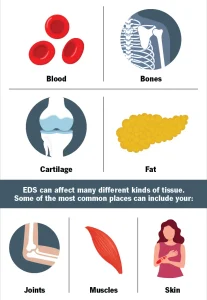
Ehlers-Danlos syndrome is a group of inherited connective tissue disorders that affect the skin, joints, and blood vessels. It is caused by genetic changes that interfere with the production or structure of collagen, a protein that provides strength and elasticity to connective tissues throughout the body. The severity of Ehlers-Danlos syndrome varies widely, with some individuals experiencing mild symptoms and others developing serious complications.
Symptoms
Symptoms of Ehlers-Danlos syndrome depend on the specific type and severity but often involve joint, skin, and vascular issues. Common symptoms include:
-
Joint hypermobility, with joints that move beyond the normal range
-
Frequent joint dislocations or sprains
-
Chronic joint or muscle pain
-
Soft, stretchy, or fragile skin
-
Easy bruising and slow wound healing
-
Fatigue and muscle weakness
Causes
Ehlers-Danlos syndrome is caused by inherited genetic mutations that affect collagen or proteins involved in collagen formation. These mutations weaken connective tissues, making them less able to support joints, skin, blood vessels, and internal organs. The condition may be inherited in different patterns depending on the subtype.
Risk Factors
Risk factors for Ehlers-Danlos syndrome are primarily genetic and include:
-
Family history of Ehlers-Danlos syndrome or connective tissue disorders
-
Inherited gene mutations affecting collagen structure or processing
Complications
Complications vary by subtype and severity and may range from mild to life-threatening. Possible complications include:
-
Chronic pain and reduced mobility
-
Recurrent joint injuries and early-onset arthritis
-
Severe skin tearing or scarring
-
Digestive and bladder problems
-
Blood vessel rupture or organ rupture in certain types
-
Cardiovascular complications such as aneurysms
Prevention
Because Ehlers-Danlos syndrome is a genetic condition, it cannot be prevented. However, steps can help reduce complications and improve quality of life:
-
Early diagnosis and regular medical follow-up
-
Joint protection strategies and physical therapy
-
Avoiding high-impact activities that stress joints
-
Monitoring for cardiovascular complications when indicated
-
Genetic counseling for affected individuals and families
With appropriate care and lifestyle adjustments, many people with Ehlers-Danlos syndrome can manage symptoms and maintain a good quality of life.
Advertisement
