
Overview
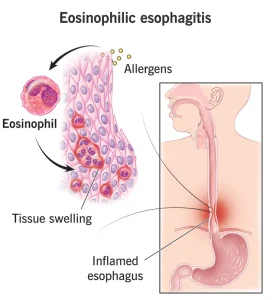
Eosinophilic esophagitis is a chronic inflammatory condition of the esophagus caused by an accumulation of eosinophils, a type of white blood cell involved in allergic reactions. This inflammation leads to irritation, swelling, and structural changes in the esophagus, making swallowing difficult. The condition is often associated with food allergies, environmental allergies, or asthma and can affect both children and adults.
Symptoms
Symptoms of eosinophilic esophagitis vary by age and severity. Common symptoms include:
-
Difficulty swallowing solid foods
-
Food getting stuck in the throat or chest
-
Chest pain not related to heart disease
-
Persistent heartburn or acid reflux symptoms
-
Upper abdominal pain
-
Nausea or vomiting
-
Poor appetite or feeding difficulties in children
-
Failure to thrive or poor weight gain in young children
Symptoms may be intermittent or progressive over time.
Causes
Eosinophilic esophagitis is primarily triggered by an abnormal immune response, often related to allergies. Potential causes include:
-
Food allergies such as dairy, wheat, eggs, soy, nuts, or seafood
-
Environmental allergens like pollen or dust mites
-
Genetic predisposition
-
Immune system hypersensitivity
-
Coexisting allergic conditions such as asthma, eczema, or allergic rhinitis
The immune response causes eosinophils to accumulate in the esophageal lining, leading to inflammation.
Risk Factors
Several factors may increase the risk of developing eosinophilic esophagitis:
-
Personal or family history of allergic diseases
-
Asthma or atopic conditions
-
Male gender
-
Childhood onset of food allergies
-
Genetic susceptibility
These factors can increase sensitivity to allergens affecting the esophagus.
Complications
If not properly managed, eosinophilic esophagitis can result in significant complications:
-
Narrowing of the esophagus due to scarring
-
Increased risk of food impaction requiring emergency care
-
Chronic swallowing difficulties
-
Reduced quality of life due to dietary restrictions
-
Esophageal tears during severe inflammation
Early diagnosis helps prevent long-term esophageal damage.
Prevention
There is no guaranteed way to prevent eosinophilic esophagitis, but symptom control and flare reduction are possible:
-
Identifying and avoiding trigger foods through guided elimination diets
-
Managing underlying allergies effectively
-
Following prescribed medical therapy to reduce inflammation
-
Regular monitoring by a healthcare provider
-
Early evaluation of persistent swallowing or reflux symptoms
Consistent management and awareness of triggers play an important role in controlling eosinophilic esophagitis and preventing complications.
Advertisement
