
Overview
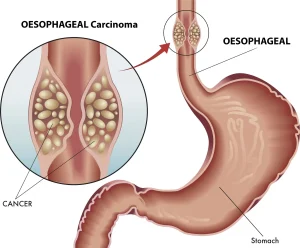
Esophageal cancer is a malignant tumor that develops in the esophagus, the muscular tube that carries food and liquids from the throat to the stomach. It commonly begins in the inner lining of the esophagus and can grow outward over time. The two main types are squamous cell carcinoma and adenocarcinoma, each associated with different risk factors. Esophageal cancer is often diagnosed at a later stage because early symptoms may be mild or overlooked.
Symptoms
Symptoms usually appear as the cancer grows and begins to narrow the esophagus. Common symptoms include:
-
Difficulty swallowing, especially solid foods
-
Sensation of food getting stuck in the chest
-
Unexplained weight loss
-
Chest pain or discomfort
-
Persistent heartburn or acid reflux
-
Hoarseness or chronic cough
-
Fatigue and weakness
-
Vomiting or coughing up blood in advanced cases
Progressive swallowing difficulty should be evaluated promptly.
Causes
Esophageal cancer develops due to abnormal changes in the cells lining the esophagus. These changes are often linked to long-term irritation or damage. Common causes include:
-
Chronic acid reflux causing damage to the esophageal lining
-
Barrett’s esophagus, a condition linked to long-term reflux
-
Tobacco use in any form
-
Heavy alcohol consumption
-
Long-standing inflammation of the esophagus
-
Exposure to certain chemicals or toxins
Cell damage over time increases the risk of cancerous transformation.
Risk Factors
Several factors increase the likelihood of developing esophageal cancer:
-
Long-term gastroesophageal reflux disease
-
Obesity, especially abdominal obesity
-
Smoking or chewing tobacco
-
Excessive alcohol intake
-
Older age
-
Male gender
-
Diet low in fruits and vegetables
-
History of Barrett’s esophagus
The risk increases when multiple factors are present together.
Complications
If esophageal cancer is not treated early, it can lead to serious complications:
-
Severe difficulty eating and malnutrition
-
Spread of cancer to nearby organs or distant sites
-
Bleeding from the esophagus
-
Formation of fistulas affecting breathing or swallowing
-
Chronic pain and reduced quality of life
Advanced disease often requires complex and long-term care.
Prevention
Esophageal cancer cannot always be prevented, but the risk can be reduced through lifestyle and medical measures:
-
Managing acid reflux and related conditions effectively
-
Maintaining a healthy body weight
-
Avoiding tobacco in all forms
-
Limiting alcohol consumption
-
Eating a diet rich in fruits and vegetables
-
Seeking regular medical follow-up for Barrett’s esophagus
-
Reporting persistent swallowing problems early
Early detection and risk reduction strategies play an important role in improving outcomes in esophageal cancer.
Advertisement
