
Overview
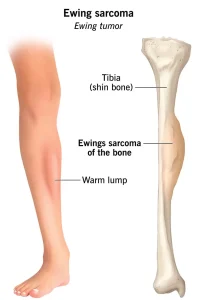
Ewing sarcoma is a rare and aggressive type of cancer that most commonly affects the bones or the soft tissues surrounding the bones. It primarily occurs in children, adolescents, and young adults. The tumor often develops in the long bones of the arms or legs, the pelvis, or the chest wall. Ewing sarcoma can grow rapidly and may spread to other parts of the body, making early diagnosis and prompt treatment essential.
Symptoms
Symptoms of Ewing sarcoma may develop gradually or suddenly and often worsen over time. Common symptoms include:
-
Persistent bone pain that may be worse at night
-
Swelling or a noticeable lump near the affected area
-
Tenderness or warmth over the tumor site
-
Reduced movement or limping if a limb is involved
-
Unexplained fever
-
Fatigue and weakness
-
Unintended weight loss
Bone pain that does not improve should be evaluated medically.
Causes
Ewing sarcoma is caused by specific genetic changes within cells, most often involving a rearrangement of genes that control cell growth. These genetic changes occur spontaneously and are not inherited. The abnormal genes cause uncontrolled cell growth, leading to tumor formation.
Risk Factors
Certain factors increase the likelihood of developing Ewing sarcoma:
-
Children and adolescents, especially during teenage years
-
Male gender
-
Tumors developing in bones of the pelvis, legs, or arms
-
Rare occurrence in certain ethnic populations
Most individuals with Ewing sarcoma do not have identifiable risk factors beyond age.
Complications
If not treated effectively, Ewing sarcoma can result in serious complications:
-
Spread of cancer to the lungs, bone marrow, or other bones
-
Fractures in weakened bones
-
Chronic pain or reduced mobility
-
Long-term side effects from intensive cancer treatments
-
Recurrence of the tumor after treatment
Early and aggressive treatment improves survival and reduces complications.
Prevention
There is no known way to prevent Ewing sarcoma because its cause is related to spontaneous genetic changes. However, early detection and management can improve outcomes:
-
Prompt evaluation of persistent bone pain or swelling
-
Regular follow-up after treatment to monitor for recurrence
-
Supportive care to manage treatment side effects
-
Rehabilitation to restore strength and mobility
Awareness of early symptoms and timely medical care are critical in improving prognosis for Ewing sarcoma.
Advertisement
