
Overview
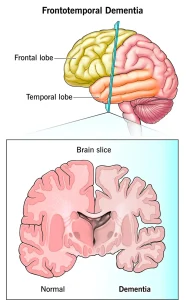
Frontotemporal dementia is a group of progressive brain disorders that primarily affect the frontal and temporal lobes of the brain. These areas are responsible for personality, behavior, language, and decision-making. Frontotemporal dementia often develops at a younger age than other forms of dementia, typically between 45 and 65 years. The condition gradually worsens over time and leads to significant changes in behavior, communication, and daily functioning.
Symptoms
Symptoms of frontotemporal dementia vary depending on the areas of the brain involved and may progress gradually:
-
Changes in personality or behavior
-
Socially inappropriate actions
-
Loss of empathy or emotional awareness
-
Impulsive or compulsive behaviors
-
Difficulty with speech or understanding language
-
Reduced ability to plan, organize, or make decisions
-
Apathy or withdrawal from activities
Memory may remain relatively preserved in the early stages.
Causes
Frontotemporal dementia is caused by degeneration of nerve cells in the frontal and temporal lobes. Abnormal accumulation of proteins within brain cells contributes to nerve cell damage. In some cases, the condition is inherited due to genetic mutations, while in others the cause is unknown.
Risk Factors
Factors that may increase the risk of developing frontotemporal dementia include:
-
Family history of frontotemporal dementia
-
Certain genetic mutations
-
Middle age
Unlike other dementias, aging alone is not the primary risk factor.
Complications
Frontotemporal dementia can lead to serious complications as it progresses:
-
Loss of independence
-
Communication difficulties
-
Behavioral problems affecting relationships
-
Increased risk of accidents or injuries
-
Difficulty with eating or swallowing in later stages
The condition places significant emotional and practical strain on caregivers.
Prevention
There is no known way to prevent frontotemporal dementia, but early recognition may help with management:
-
Seeking medical evaluation for persistent behavioral or language changes
-
Genetic counseling for families with a history of the condition
-
Maintaining overall brain health through mental and physical activity
-
Managing cardiovascular risk factors
Supportive care and early planning can improve quality of life for individuals with frontotemporal dementia and their families.
Advertisement
