
Overview
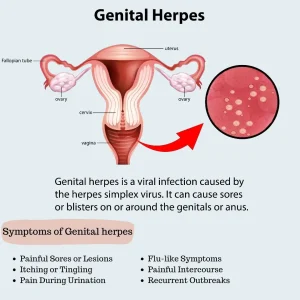
Genital herpes is a common sexually transmitted infection caused by the herpes simplex virus. It primarily affects the genital and anal areas and is characterized by recurrent outbreaks of painful sores. The infection is lifelong, as the virus remains dormant in the body and can reactivate periodically. Many individuals with genital herpes may have mild symptoms or none at all but can still transmit the virus to others.
Symptoms
Symptoms of genital herpes vary widely and may be mild or severe, especially during the first outbreak. Common symptoms include:
-
Small blisters or open sores on or around the genitals, anus, or thighs
-
Pain, itching, or tingling in the genital area
-
Burning sensation during urination
-
Flu-like symptoms such as fever, body aches, and swollen lymph nodes during the initial episode
Some people may experience recurrent outbreaks, while others have long periods without symptoms.
Causes
Genital herpes is caused by infection with the herpes simplex virus. The infection occurs through direct skin-to-skin contact with an infected person, usually during sexual activity. Causes include:
-
Herpes simplex virus type 2, the most common cause
-
Herpes simplex virus type 1, which can also cause genital infection through oral-genital contact
The virus enters the body through small breaks in the skin or mucous membranes.
Risk Factors
Several factors increase the risk of acquiring genital herpes, including:
-
Unprotected sexual activity
-
Multiple sexual partners
-
Having a partner with a known herpes infection
-
Weakened immune system
-
History of other sexually transmitted infections
The risk remains even when an infected partner has no visible sores.
Complications
Genital herpes can lead to physical and emotional complications, particularly if not managed properly. Possible complications include:
-
Frequent or severe recurrent outbreaks
-
Increased risk of acquiring or transmitting HIV
-
Psychological distress, including anxiety or depression
-
Transmission of the virus from mother to baby during childbirth
Prompt medical care and counseling can help reduce these risks.
Prevention
While there is no cure for genital herpes, steps can be taken to reduce the risk of infection and transmission:
-
Using condoms consistently during sexual activity
-
Avoiding sexual contact during active outbreaks
-
Limiting the number of sexual partners
-
Open communication with sexual partners about infection status
-
Regular health checkups and testing when appropriate
Preventive measures and early management play an important role in controlling the spread of genital herpes and reducing its impact on daily life.
Advertisement
