
Overview
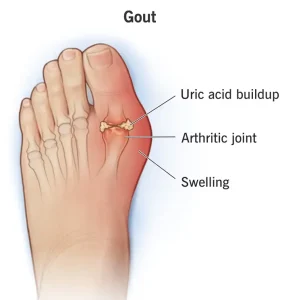
Gout is a type of inflammatory arthritis caused by the buildup of uric acid crystals in the joints. Uric acid forms when the body breaks down substances called purines, which are found naturally in the body and in certain foods. When uric acid levels become too high, crystals can accumulate in joints, leading to sudden and severe pain. Gout commonly affects the big toe but can involve other joints as well.
Symptoms
Gout symptoms often appear suddenly and may occur at night. Common symptoms include:
-
Intense joint pain, often in the big toe
-
Swelling and redness around the affected joint
-
Warmth and tenderness in the joint
-
Limited range of motion during flare-ups
-
Lingering discomfort after severe pain subsides
Attacks may last for days or weeks and can recur over time.
Causes
Gout occurs due to elevated levels of uric acid in the blood. This may result from:
-
Increased uric acid production in the body
-
Reduced kidney ability to remove uric acid
-
Diet high in purine-rich foods
-
Excessive alcohol consumption
-
Certain medications such as diuretics
When uric acid crystallizes, it triggers inflammation in the joints.
Risk Factors
Several factors increase the likelihood of developing gout, including:
-
Male sex
-
Obesity
-
Family history of gout
-
High intake of red meat, seafood, or sugary drinks
-
Heavy alcohol use
-
Medical conditions such as kidney disease, diabetes, or hypertension
Risk factors may vary between individuals.
Complications
Untreated or poorly managed gout can lead to long-term joint and health problems. Possible complications include:
-
Recurrent gout attacks
-
Formation of tophi, which are lumps of uric acid crystals under the skin
-
Chronic arthritis and joint damage
-
Kidney stones or kidney disease
Early treatment can help prevent these complications.
Prevention
Gout can often be prevented or managed by lowering uric acid levels:
-
Maintaining a healthy body weight
-
Limiting purine-rich foods and sugary beverages
-
Reducing alcohol intake
-
Staying well hydrated
-
Managing underlying health conditions
Lifestyle changes and regular medical follow-up play an important role in preventing gout attacks and protecting joint health.
Advertisement
