
Overview
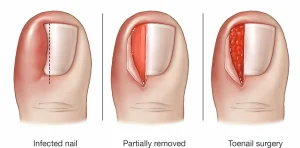
Ingrown toenails occur when the edge or corner of a toenail grows into the surrounding skin instead of over it. This condition most commonly affects the big toe and can cause pain, swelling, and infection if left untreated. Ingrown toenails can affect people of all ages and are often related to improper nail trimming or pressure on the toes.
Symptoms
-
Pain or tenderness along one or both sides of the toenail
-
Redness and swelling around the affected area
-
Warmth of the skin near the nail
-
Infection signs such as pus, increased pain, or foul odor
-
Difficulty walking or wearing shoes comfortably
Causes
Ingrown toenails develop due to several factors, including:
-
Cutting toenails too short or rounding the edges
-
Wearing tight or ill-fitting shoes
-
Repeated pressure or injury to the toe
-
Thick or curved toenails
-
Genetic tendency for nail shape abnormalities
Risk factors
-
Improper nail care habits
-
Tight footwear or high heels
-
Activities that place repeated stress on the toes
-
Poor foot hygiene
-
Diabetes or conditions affecting circulation
Complications
-
Localized infection of the toe
-
Abscess formation
-
Chronic pain or inflammation
-
Delayed healing, especially in people with diabetes
-
Spread of infection to surrounding tissues or bone in severe cases
Prevention
-
Cutting toenails straight across without rounding the corners
-
Avoiding cutting nails too short
-
Wearing properly fitting shoes with enough toe room
-
Keeping feet clean and dry
-
Protecting toes from injury
-
Seeking early treatment if pain or redness develops
Mild cases of ingrown toenails can often be managed at home, but persistent pain, infection, or recurrence may require medical or surgical treatment by a healthcare professional.
Advertisement
