
Overview
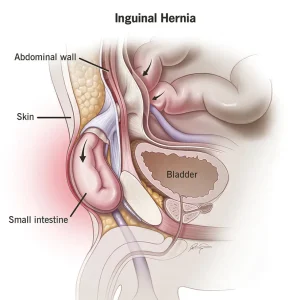
An inguinal hernia occurs when tissue, such as part of the intestine, pushes through a weak area in the abdominal muscles near the groin. It is one of the most common types of hernia and can affect both men and women, though it is more frequent in men. Inguinal hernias may be present at birth or develop over time and often become more noticeable when coughing, lifting, or standing.
Symptoms
-
A visible bulge in the groin or scrotum
-
Pain or discomfort in the groin, especially when bending, coughing, or lifting
-
A feeling of heaviness or pressure in the groin area
-
Burning or aching sensation at the bulge site
-
Weakness or pulling sensation in the groin
-
In severe cases, nausea or vomiting if the hernia becomes trapped
Causes
Inguinal hernias develop due to weakness in the abdominal wall combined with increased pressure. Causes may include:
-
Congenital weakness in the abdominal muscles
-
Heavy lifting or straining
-
Chronic coughing
-
Obesity
-
Pregnancy
-
Straining during bowel movements or urination
Risk factors
-
Male gender
-
Family history of hernias
-
Premature birth or low birth weight
-
Chronic constipation or cough
-
Smoking
-
Older age
Complications
-
Incarcerated hernia, where the protruding tissue becomes trapped
-
Strangulated hernia, which cuts off blood supply and is a medical emergency
-
Severe pain and bowel obstruction
-
Infection or tissue death in untreated cases
Prevention
While inguinal hernias cannot always be prevented, certain measures may reduce risk:
-
Maintaining a healthy weight
-
Avoiding heavy lifting or using proper lifting techniques
-
Treating chronic cough or constipation
-
Quitting smoking
-
Strengthening abdominal muscles with appropriate exercises
Surgical repair is the most effective treatment for inguinal hernias, especially when symptoms worsen or complications develop. Early medical evaluation helps prevent serious outcomes.
Advertisement
