
Overview
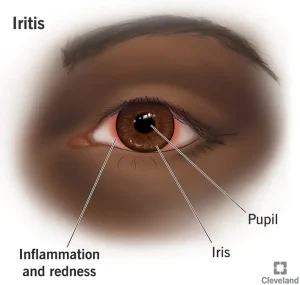
Iritis is an inflammatory condition affecting the iris, the colored part of the eye. It is the most common form of anterior uveitis and can occur suddenly or develop gradually. Iritis may affect one or both eyes and can lead to vision problems if not treated promptly. Early diagnosis and appropriate treatment are essential to prevent long-term eye damage.
Symptoms
Symptoms of iritis often develop quickly and may include:
-
Eye redness, especially around the iris
-
Eye pain or discomfort
-
Sensitivity to light
-
Blurred or decreased vision
-
Headache
-
Small or irregularly shaped pupil
Causes
Iritis can occur due to a variety of underlying factors, though the cause is often unknown. Possible causes include:
-
Eye injury or trauma
-
Autoimmune or inflammatory disorders
-
Infections affecting the eye or body
-
Certain medications
-
Systemic conditions such as arthritis or inflammatory bowel disease
Risk factors
-
Autoimmune diseases
-
Previous episodes of uveitis or iritis
-
Eye injury or surgery
-
Certain infections
-
Genetic predisposition in some individuals
Complications
-
Glaucoma due to increased eye pressure
-
Cataracts
-
Permanent vision loss
-
Formation of adhesions between the iris and lens
-
Chronic or recurrent inflammation
Prevention
Iritis cannot always be prevented, but the risk of complications can be reduced by:
-
Seeking immediate medical care for eye pain or redness
-
Managing underlying autoimmune or inflammatory conditions
-
Using protective eyewear to prevent eye injuries
-
Following prescribed treatment and follow-up schedules
-
Avoiding delayed or incomplete treatment
Prompt evaluation by an eye care specialist is crucial for preserving vision and preventing long-term complications associated with iritis.
Advertisement
