
Overview
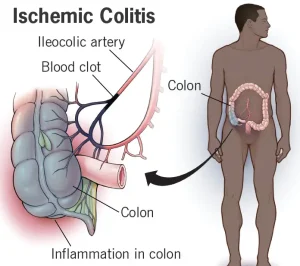
Ischemic colitis is a condition that occurs when blood flow to part of the large intestine is reduced, leading to inflammation and injury of the colon lining. The decreased blood supply may be temporary or persistent and can result in mild to severe symptoms. Ischemic colitis is more common in older adults, but it can occur at any age depending on underlying risk factors. Early recognition and treatment are important to prevent serious complications.
Symptoms
Symptoms often develop suddenly and may vary in severity. Common symptoms include:
-
Crampy abdominal pain, usually on the left side
-
Urgent need to have a bowel movement
-
Bloody or maroon-colored stools
-
Diarrhea
-
Abdominal tenderness
-
Nausea or vomiting in some cases
Causes
Ischemic colitis develops when blood flow through the arteries supplying the colon is reduced. Possible causes include:
-
Narrowing or blockage of blood vessels due to atherosclerosis
-
Low blood pressure or dehydration
-
Blood clots affecting intestinal arteries
-
Heart failure or irregular heart rhythms
-
Certain medications that reduce blood flow
-
Abdominal surgery or trauma
Risk factors
-
Older age
-
Cardiovascular disease
-
Diabetes
-
High blood pressure
-
Smoking
-
History of blood clots
-
Use of medications that affect circulation
Complications
-
Chronic colitis with ongoing symptoms
-
Ulceration or tissue death in the colon
-
Bowel perforation
-
Severe infection or sepsis
-
Stricture formation causing bowel narrowing
Prevention
Not all cases of ischemic colitis can be prevented, but the risk may be reduced by:
-
Managing heart and blood vessel conditions
-
Maintaining healthy blood pressure and hydration
-
Avoiding smoking
-
Using medications as prescribed
-
Seeking medical care for sudden abdominal pain or bloody stools
With prompt diagnosis and appropriate treatment, most people recover fully from ischemic colitis. Severe or recurrent cases may require hospitalization or surgical intervention to prevent long-term complications.
Advertisement
