
Overview
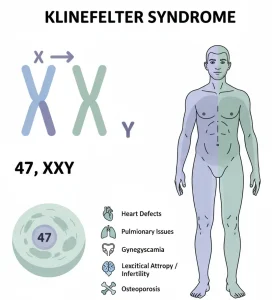
Klinefelter syndrome is a genetic condition that affects males and occurs when an individual is born with one or more extra X chromosomes, most commonly 47,XXY instead of the typical 46,XY. The condition can affect physical development, hormone levels, and fertility. Many individuals with Klinefelter syndrome are not diagnosed until adolescence or adulthood due to mild or subtle symptoms.
Symptoms
Symptoms of Klinefelter syndrome vary widely and may appear at different stages of life.
Common symptoms include:
-
Small testes and reduced testosterone levels
-
Delayed or incomplete puberty
-
Infertility or reduced sperm production
-
Taller than average height with long legs
-
Reduced facial and body hair
-
Breast tissue development
-
Low muscle tone or muscle mass
-
Learning difficulties, especially with language or reading
-
Low energy levels and reduced libido in adulthood
Causes
Klinefelter syndrome is caused by a chromosomal abnormality that occurs during the formation of reproductive cells.
Key causes include:
-
Presence of an extra X chromosome due to random errors during cell division
-
Mosaic forms, where some cells have the extra chromosome and others do not
-
The condition is not inherited and occurs randomly
Risk Factors
There are no specific lifestyle-related risk factors for Klinefelter syndrome, but certain factors may slightly increase the likelihood.
Risk factors include:
-
Advanced maternal age at pregnancy
-
Random chromosomal nondisjunction events
Complications
Klinefelter syndrome can lead to a range of health and developmental complications if not properly managed.
Possible complications include:
-
Infertility
-
Low bone density and increased fracture risk
-
Metabolic disorders such as diabetes
-
Cardiovascular disease
-
Breast cancer
-
Autoimmune disorders
-
Psychological challenges, including anxiety and depression
Prevention
There is no known way to prevent Klinefelter syndrome, as it results from random chromosomal changes before birth. However, early diagnosis and appropriate medical care can help reduce complications and improve quality of life.
Preventive care strategies include:
-
Early developmental screening and support
-
Hormone therapy when medically indicated
-
Regular monitoring for associated health conditions
-
Ongoing medical follow-up and counseling
If you want, I can also provide diagnosis methods, treatment options, or long-term outlook sections in the same WordPress- and ACF-ready format.
Advertisement
