
Overview
Leukemia is a type of cancer that affects the blood and bone marrow, where blood cells are produced. It occurs when abnormal white blood cells grow uncontrollably and crowd out healthy blood cells. These cancerous cells interfere with the body’s ability to fight infections, carry oxygen, and control bleeding.
Leukemia can develop suddenly or progress slowly over time, depending on the type. It is broadly classified as acute or chronic and as lymphocytic or myeloid, based on how quickly it progresses and which blood cells are affected. Treatment and outlook vary widely depending on the specific type, age, and overall health of the person.
Symptoms
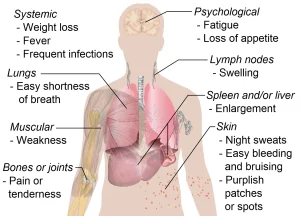
Leukemia symptoms can be mild at first and may resemble common illnesses. As the disease progresses, symptoms often become more noticeable. Common symptoms include:
-
Fatigue and weakness
-
Frequent or severe infections
-
Fever or chills
-
Unexplained weight loss
-
Pale skin
-
Easy bruising or bleeding, such as nosebleeds or bleeding gums
-
Tiny red spots on the skin caused by bleeding
-
Bone or joint pain
-
Swollen lymph nodes, liver, or spleen
-
Night sweats
Some people may have no symptoms in the early stages, especially with chronic forms of leukemia.
Causes
Leukemia develops when blood-forming cells in the bone marrow acquire genetic changes that cause them to grow and divide uncontrollably. These abnormal cells do not function properly and gradually replace healthy blood cells.
The exact reason why these genetic changes occur is not always known. In many cases, leukemia develops without any clear or identifiable cause.
Risk factors
Several factors may increase the risk of developing leukemia, including:
-
Exposure to high levels of radiation
-
Previous cancer treatment with chemotherapy or radiation therapy
-
Certain genetic disorders, such as Down syndrome
-
Smoking, which is linked to some types of leukemia
-
Family history of leukemia
-
Exposure to certain chemicals, such as benzene
Having one or more risk factors does not mean a person will develop leukemia, and many people with leukemia have no known risk factors.
Complications
Leukemia can lead to a range of complications due to low levels of normal blood cells and weakened immunity. Possible complications include:
-
Severe or recurrent infections
-
Anemia causing extreme fatigue and shortness of breath
-
Excessive bleeding or hemorrhage
-
Organ damage from cancer spread or treatment side effects
-
Increased risk of other cancers
-
Emotional and psychological stress related to long-term treatment
Some complications may be life-threatening and require immediate medical care.
Prevention
There is no sure way to prevent leukemia, but certain steps may help lower risk:
-
Avoiding smoking and tobacco products
-
Limiting exposure to harmful chemicals
-
Reducing unnecessary exposure to radiation
-
Following safety guidelines in workplaces with chemical exposure
-
Maintaining regular health checkups, especially for those with known risk factors
Early diagnosis and appropriate treatment can greatly improve outcomes for many types of leukemia.
Advertisement
