
Overview
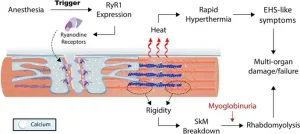
Malignant hyperthermia is a rare but life-threatening reaction to certain medicines used during general anesthesia or, less commonly, intense physical activity or heat exposure. The condition causes a rapid rise in body temperature and severe muscle contractions due to an abnormal reaction in skeletal muscle. Malignant hyperthermia is usually inherited and occurs in people who carry specific genetic changes affecting muscle cell function.
Because malignant hyperthermia can progress very quickly, it is considered a medical emergency. Prompt recognition and treatment are critical to prevent serious complications or death. With proper precautions and awareness, people at risk can safely undergo medical procedures.
Symptoms
Symptoms of malignant hyperthermia often develop shortly after exposure to triggering anesthetic drugs but can also appear during or after surgery.
Common symptoms include:
-
Rapid and dangerously high body temperature
-
Severe muscle rigidity or stiffness
-
Rapid heart rate
-
Rapid or difficult breathing
-
Dark-colored urine
-
Excessive sweating
-
Increased carbon dioxide levels despite increased ventilation
-
Muscle pain or weakness after anesthesia
In some cases, early signs such as a rapid heart rate or muscle stiffness may appear before a rise in body temperature.
Causes
Malignant hyperthermia is caused by an inherited abnormality in the way muscle cells handle calcium. This abnormality leads to uncontrolled muscle contraction and increased metabolism when exposed to triggering substances.
Common triggers include:
-
Certain general anesthetic gases
-
A muscle relaxant called succinylcholine
Rarely, strenuous exercise or extreme heat may trigger symptoms in susceptible individuals. The condition is most often linked to genetic mutations, particularly those affecting the ryanodine receptor in muscle cells.
Risk factors
Factors that increase the risk of malignant hyperthermia include:
-
Family history of malignant hyperthermia
-
Known genetic mutations associated with the condition
-
Personal history of severe reaction to anesthesia
-
Certain inherited muscle disorders
People with these risk factors should inform healthcare providers before any surgical or dental procedure requiring anesthesia.
Complications
If not treated immediately, malignant hyperthermia can lead to severe complications, including:
-
Muscle breakdown
-
Kidney failure
-
Heart rhythm disturbances
-
Severe electrolyte imbalances
-
Blood clotting disorders
-
Death
Early treatment significantly reduces the risk of long-term complications.
Prevention
Malignant hyperthermia cannot be prevented in people who carry the genetic risk, but serious reactions can usually be avoided with proper precautions.
Preventive measures include:
-
Informing healthcare providers about personal or family history of malignant hyperthermia
-
Using non-triggering anesthetic medications
-
Wearing a medical alert bracelet indicating susceptibility
-
Genetic testing or muscle testing in individuals with a family history
-
Ensuring medical facilities have access to emergency treatment for malignant hyperthermia
With appropriate planning and awareness, individuals at risk can safely receive medical care without triggering a reaction.
Request an appointment
Advertisement
