
Overview
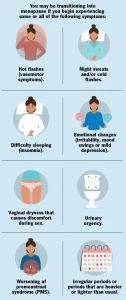
Menopause is a natural biological process that marks the end of a woman’s reproductive years. It is officially diagnosed after 12 consecutive months without a menstrual period and typically occurs between the ages of 45 and 55. Menopause happens due to a gradual decline in the production of reproductive hormones, particularly estrogen and progesterone. While menopause is not a medical condition, the physical and emotional changes associated with it can significantly affect quality of life.
Symptoms
Symptoms of menopause can vary widely in type and intensity. Some women experience mild changes, while others may have more disruptive symptoms.
Common symptoms may include
-
Irregular menstrual periods before they stop completely
-
Hot flashes and night sweats
-
Vaginal dryness and discomfort during intercourse
-
Mood changes such as irritability, anxiety, or depression
-
Sleep disturbances or insomnia
-
Fatigue and low energy levels
-
Difficulty concentrating or memory lapses
-
Weight gain and changes in body composition
Causes
Menopause occurs naturally as part of aging when the ovaries gradually stop producing eggs and reduce hormone production.
Primary causes include
-
Natural decline in estrogen and progesterone levels
-
Surgical removal of the ovaries, leading to sudden menopause
-
Certain medical treatments such as chemotherapy or radiation therapy
-
Primary ovarian insufficiency, where the ovaries stop functioning earlier than normal
Risk Factors
Several factors can influence the timing and experience of menopause.
Key risk factors include
-
Age, as menopause typically occurs in midlife
-
Family history of early or late menopause
-
Smoking, which can lead to earlier menopause
-
Cancer treatments that affect ovarian function
-
Autoimmune or genetic conditions affecting the ovaries
Complications
The hormonal changes associated with menopause can increase the risk of certain health conditions over time.
Possible complications include
-
Osteoporosis and increased risk of fractures
-
Cardiovascular disease
-
Weight gain and metabolic changes
-
Increased risk of urinary tract issues
-
Sexual health concerns related to vaginal dryness and discomfort
-
Mood disorders or worsening of existing mental health conditions
Prevention
Menopause itself cannot be prevented, but its symptoms and complications can often be managed effectively.
Preventive and supportive measures may include
-
Maintaining a balanced diet rich in calcium and vitamin D
-
Engaging in regular physical activity
-
Avoiding smoking and limiting alcohol intake
-
Practicing stress management techniques
-
Regular health checkups to monitor bone, heart, and overall health
Early education and proactive health management can help reduce the impact of menopause-related changes and support long-term well-being.
Advertisement
