
Overview
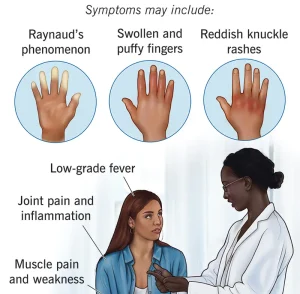
Mixed connective tissue disease is a rare autoimmune disorder characterized by features of several connective tissue diseases occurring together in the same individual. It commonly shows overlapping signs of conditions such as lupus, scleroderma, and polymyositis. The immune system mistakenly attacks the body’s own connective tissues, leading to inflammation and damage in multiple organs.
Mixed connective tissue disease often develops gradually and may evolve over time. The severity ranges from mild to potentially serious, depending on which organs are involved and how the disease progresses.
Symptoms
Symptoms of mixed connective tissue disease vary widely and may appear in flares with periods of remission.
Common symptoms include:
-
Joint pain, stiffness, and swelling
-
Muscle weakness
-
Raynaud phenomenon, where fingers or toes turn white or blue in response to cold or stress
-
Swollen hands or fingers
-
Fatigue
-
Fever
-
Skin rashes
-
Difficulty swallowing
-
Shortness of breath
Symptoms may change over time as different connective tissue features become more prominent.
Causes
The exact cause of mixed connective tissue disease is not known. It is considered an autoimmune condition in which the immune system produces antibodies that attack connective tissue components.
Contributing factors may include:
-
Abnormal immune system regulation
-
Genetic susceptibility
-
Environmental triggers such as infections
-
Hormonal influences
The condition is strongly associated with specific antibodies that affect connective tissue function.
Risk Factors
Several factors may increase the likelihood of developing mixed connective tissue disease.
Key risk factors include:
-
Female sex
-
Family history of autoimmune diseases
-
Presence of other autoimmune conditions
-
Certain genetic markers
The disease most commonly develops in young to middle-aged adults.
Complications
Mixed connective tissue disease can lead to serious complications if vital organs are affected.
Possible complications include:
-
Pulmonary hypertension
-
Interstitial lung disease
-
Heart inflammation or rhythm problems
-
Kidney involvement
-
Esophageal dysfunction
-
Long-term joint damage
-
Increased risk of infections due to immune system dysfunction or treatment
Regular monitoring is essential to detect and manage complications early.
Prevention
There is no known way to prevent mixed connective tissue disease, as its exact cause is unclear. However, early diagnosis and proper management can help limit disease progression and complications.
General preventive measures include:
-
Regular medical follow-up
-
Prompt evaluation of new or worsening symptoms
-
Avoiding smoking
-
Managing stress
-
Protecting hands and feet from cold exposure
-
Following prescribed treatment plans
Ongoing care and lifestyle adjustments play an important role in maintaining function and quality of life for individuals with mixed connective tissue disease.
Advertisement
