
Overview
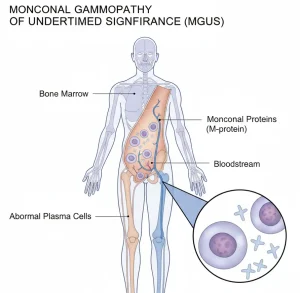
Monoclonal gammopathy of undetermined significance is a condition in which an abnormal protein, known as a monoclonal protein or M protein, is found in the blood. This protein is produced by a small number of abnormal plasma cells in the bone marrow. MGUS itself is not cancer and often does not cause symptoms or health problems.
MGUS is usually discovered during routine blood tests done for other reasons. While many people with MGUS never develop complications, a small percentage may progress over time to more serious blood disorders, which is why regular monitoring is important.
Symptoms
Most people with monoclonal gammopathy of undetermined significance do not experience any symptoms.
When symptoms are present, they are usually related to conditions that MGUS may progress into rather than MGUS itself. Possible associated symptoms include:
-
Fatigue
-
Bone pain
-
Weakness
-
Unexplained weight loss
-
Recurrent infections
In the absence of progression, MGUS typically remains asymptomatic.
Causes
The exact cause of monoclonal gammopathy of undetermined significance is not known. It occurs when plasma cells in the bone marrow begin producing an abnormal monoclonal protein.
Factors that may contribute include:
-
Age-related changes in the immune system
-
Genetic predisposition
-
Chronic immune stimulation
-
Environmental or occupational exposures
In many cases, no clear cause can be identified.
Risk Factors
Several factors increase the likelihood of developing monoclonal gammopathy of undetermined significance.
Key risk factors include:
-
Advancing age, especially over 50 years
-
Male sex
-
Family history of MGUS or related blood disorders
-
Certain ethnic backgrounds
-
History of chronic inflammatory or immune conditions
The condition becomes more common as people get older.
Complications
Although MGUS is usually harmless, it can lead to complications in a small number of individuals if it progresses.
Possible complications include:
-
Progression to multiple myeloma or other blood cancers
-
Bone thinning or fractures
-
Kidney problems related to abnormal protein buildup
-
Anemia
-
Increased risk of infections
The risk of progression is generally low but persists throughout life.
Prevention
There is no known way to prevent monoclonal gammopathy of undetermined significance, as its cause is unclear. However, steps can be taken to reduce the risk of complications.
Preventive and management strategies include:
-
Regular medical follow-up and blood testing
-
Reporting new symptoms such as bone pain, fatigue, or infections
-
Maintaining overall health with a balanced diet and regular exercise
-
Managing chronic medical conditions effectively
Ongoing monitoring is essential to detect any changes early and ensure timely medical care if progression occurs.
Advertisement
