
Overview
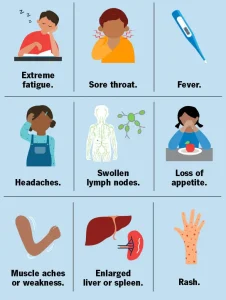
Mononucleosis, commonly called mono, is an infectious illness most often caused by the Epstein-Barr virus. It is sometimes referred to as the kissing disease because it spreads mainly through saliva. Mononucleosis is more common in teenagers and young adults, but it can affect people of all ages.
The condition usually causes fatigue, fever, and sore throat, and symptoms can last for several weeks. Most people recover fully with rest and supportive care.
Symptoms
Symptoms of mononucleosis may appear four to six weeks after exposure to the virus. The severity can vary from mild to significant.
Common symptoms include:
-
Extreme fatigue
-
Fever
-
Sore throat, often severe
-
Swollen lymph nodes in the neck and armpits
-
Swollen tonsils
-
Headache
-
Muscle aches
-
Loss of appetite
Some individuals may also experience an enlarged spleen or liver, which may cause upper abdominal discomfort.
Causes
Mononucleosis is most commonly caused by the Epstein-Barr virus, a member of the herpes virus family. Once infected, the virus remains in the body in an inactive state for life.
The virus spreads through:
-
Saliva
-
Sharing drinks, utensils, or toothbrushes
-
Coughing or sneezing
-
Close personal contact
Less commonly, mononucleosis can be caused by other viruses.
Risk Factors
Certain factors increase the risk of developing mononucleosis.
These include:
-
Being between 15 and 24 years of age
-
Close contact with someone infected
-
Living in crowded environments such as dormitories
-
Weakened immune system
Children may become infected but often have mild or no noticeable symptoms.
Complications
Most people recover without long-term problems, but complications can occur, especially if the spleen becomes enlarged.
Possible complications include:
-
Enlarged or ruptured spleen
-
Liver inflammation
-
Anemia
-
Low platelet count
-
Heart or nervous system involvement in rare cases
-
Secondary bacterial infections, such as strep throat
Avoiding strenuous activity during recovery helps reduce the risk of spleen injury.
Prevention
There is no vaccine to prevent mononucleosis, but the risk of infection can be reduced with simple precautions.
Prevention measures include:
-
Avoiding sharing food, drinks, or personal items
-
Not kissing someone who is infected
-
Practicing good hand hygiene
-
Covering the mouth when coughing or sneezing
People recovering from mononucleosis should rest adequately and follow medical advice to support full recovery and prevent complications.
Request an appointment
Advertisement
