
Overview
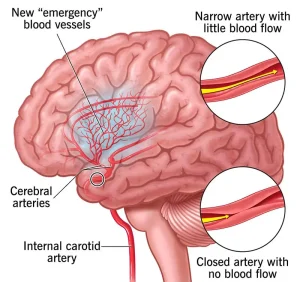
Moyamoya disease is a rare, progressive cerebrovascular disorder in which certain arteries at the base of the brain become narrowed or blocked. To compensate for reduced blood flow, the brain develops a network of tiny blood vessels that appear hazy on imaging, resembling a puff of smoke. This abnormal circulation is fragile and prone to bleeding or blockage.
The condition can affect both children and adults. In children, it often presents with symptoms related to reduced blood flow to the brain, while adults may experience bleeding-related complications. Early diagnosis and ongoing management are important to reduce the risk of stroke.
Symptoms
Symptoms of moyamoya disease vary by age and the severity of blood vessel narrowing. They may occur suddenly or develop gradually over time.
Common symptoms include:
-
Recurrent strokes or transient ischemic attacks
-
Weakness or paralysis on one side of the body
-
Difficulty speaking or understanding speech
-
Headaches
-
Seizures, especially in children
-
Vision problems
-
Cognitive or developmental delays in children
-
Involuntary movements
Symptoms may worsen during physical exertion, crying, fever, or dehydration due to reduced cerebral blood flow.
Causes
The exact cause of moyamoya disease is not fully understood. It involves progressive narrowing of the internal carotid arteries and their branches in the brain.
Possible contributing factors include:
-
Genetic predisposition
-
Abnormal development of blood vessel walls
-
Immune or inflammatory mechanisms
In some cases, moyamoya occurs in association with other medical conditions, but many cases have no identifiable cause.
Risk Factors
Certain factors increase the likelihood of developing moyamoya disease.
Key risk factors include:
-
Family history of moyamoya disease
-
Childhood onset
-
Female sex
-
Asian ancestry
-
Presence of certain genetic or medical conditions
The disease can occur sporadically or run in families.
Complications
Without proper management, moyamoya disease can lead to serious and potentially life-threatening complications.
Possible complications include:
-
Ischemic stroke due to reduced blood flow
-
Hemorrhagic stroke from rupture of fragile blood vessels
-
Recurrent transient ischemic attacks
-
Seizure disorders
-
Cognitive decline or learning difficulties
-
Permanent neurological deficits
The risk of complications increases as the disease progresses.
Prevention
There is no known way to prevent moyamoya disease because its underlying cause is unclear. However, steps can be taken to reduce the risk of complications.
Preventive and management strategies include:
-
Regular neurological follow-up and brain imaging
-
Managing blood pressure and hydration
-
Avoiding activities that may reduce blood flow to the brain
-
Taking prescribed medications as directed
-
Early surgical evaluation when recommended
Timely diagnosis and appropriate treatment can significantly improve long-term outcomes and reduce the risk of stroke.
Advertisement
