
Overview
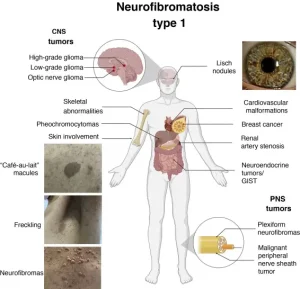
Neurofibromatosis type 1 is a genetic disorder that affects the nervous system and causes tumors to grow along nerves throughout the body. It is one of the most common inherited neurological conditions and usually becomes apparent during childhood. The disorder can affect the skin, bones, eyes, and nervous system, with symptoms ranging from mild to severe. Neurofibromatosis type 1 is also known as von Recklinghausen disease.
Symptoms
Symptoms of neurofibromatosis type 1 vary widely and may increase with age:
-
Light brown skin patches known as café-au-lait spots
-
Freckling in the armpits or groin area
-
Soft, benign tumors on or under the skin called neurofibromas
-
Lisch nodules, which are tiny benign growths on the iris of the eye
-
Bone deformities such as scoliosis or bowing of the legs
-
Learning difficulties or attention problems
-
Vision problems due to optic pathway tumors
Some individuals may experience only mild symptoms, while others develop more serious complications.
Causes
Neurofibromatosis type 1 is caused by a mutation in the NF1 gene, which plays a role in controlling cell growth. This mutation leads to uncontrolled growth of nerve tissue. The condition is inherited in an autosomal dominant pattern, meaning a child needs only one copy of the altered gene to develop the disorder. In some cases, the mutation occurs spontaneously with no family history.
Risk Factors
The primary risk factor for neurofibromatosis type 1 is genetic inheritance:
-
Having a parent with neurofibromatosis type 1
-
Spontaneous genetic mutation during early development
The condition affects males and females equally and occurs across all ethnic groups.
Complications
Neurofibromatosis type 1 can lead to various complications:
-
Vision loss from optic pathway gliomas
-
Chronic pain or nerve damage
-
Learning disabilities or behavioral challenges
-
Bone abnormalities and increased risk of fractures
-
High blood pressure
-
Increased risk of certain cancers, including malignant nerve sheath tumors
Regular monitoring is important to identify and manage complications early.
Prevention
Neurofibromatosis type 1 cannot be prevented because it is a genetic condition. However, early diagnosis and proactive management can help reduce complications:
-
Genetic counseling for affected individuals and families
-
Routine medical evaluations to monitor tumor growth and development
-
Early intervention for learning or developmental challenges
-
Prompt medical attention for new or worsening symptoms
Ongoing medical care plays a key role in improving long-term outcomes for individuals with neurofibromatosis type 1.
Advertisement
