
Overview
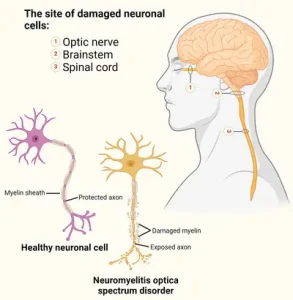
Neuromyelitis optica is a rare autoimmune disorder that primarily affects the optic nerves and spinal cord. It causes inflammation that can lead to vision loss, weakness, paralysis, and sensory disturbances. Neuromyelitis optica was once considered a form of multiple sclerosis but is now recognized as a distinct condition with different underlying mechanisms. The disease may occur as a single episode or as a relapsing condition.
Symptoms
Symptoms of neuromyelitis optica often develop suddenly and may be severe:
-
Eye pain and blurred or loss of vision in one or both eyes
-
Weakness or paralysis in the arms or legs
-
Numbness, tingling, or loss of sensation
-
Loss of bladder or bowel control
-
Muscle spasms or stiffness
-
Severe nausea, vomiting, or hiccups in some cases
Symptoms may worsen during relapses and improve partially between attacks.
Causes
Neuromyelitis optica is caused by an abnormal immune response in which the body produces antibodies that attack components of the central nervous system. In many cases, antibodies target aquaporin-4, a protein involved in water transport in the brain and spinal cord. This immune attack leads to inflammation and damage to nerve fibers and their protective covering.
Risk Factors
Several factors may increase the risk of neuromyelitis optica:
-
Presence of aquaporin-4 antibodies
-
Female sex
-
History of autoimmune diseases
-
Middle adulthood, although it can occur at any age
-
Genetic susceptibility combined with environmental triggers
The condition is rare but can be severe if untreated.
Complications
Neuromyelitis optica can result in serious complications:
-
Permanent vision loss
-
Chronic weakness or paralysis
-
Ongoing pain and muscle stiffness
-
Recurrent disease relapses
-
Reduced mobility and quality of life
Early diagnosis and treatment are critical to limit long-term neurological damage.
Prevention
There is no known way to prevent neuromyelitis optica, but early recognition and long-term management can reduce relapses:
-
Prompt evaluation of vision or neurological symptoms
-
Early initiation of immune-suppressing therapy
-
Regular neurological and ophthalmologic follow-up
-
Managing coexisting autoimmune conditions
Timely treatment and ongoing care help improve outcomes for individuals with neuromyelitis optica.
Request an appointment
Advertisement
