
Overview
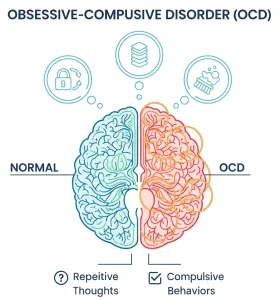
Obsessive-Compulsive Disorder (OCD) is a chronic mental health condition characterized by persistent, unwanted thoughts known as obsessions and repetitive behaviors or mental acts called compulsions. These obsessions and compulsions can interfere significantly with daily life, work, and relationships. OCD affects people of all ages and is not simply a habit or personality trait but a recognized psychiatric disorder that often requires professional treatment.
Symptoms
Symptoms of OCD generally fall into two main categories: obsessions and compulsions. A person may experience one or both.
Obsessions may include:
-
Recurrent, intrusive thoughts, urges, or images
-
Excessive fear of contamination or germs
-
Fear of causing harm to oneself or others
-
Unwanted thoughts related to religion, morality, or order
-
Intense need for symmetry or exactness
Compulsions may include:
-
Repeated handwashing or cleaning
-
Checking behaviors, such as locks or appliances
-
Counting, repeating words, or performing actions in a specific order
-
Excessive organizing or arranging
-
Mental rituals aimed at reducing anxiety
Causes
The exact cause of OCD is not fully understood, but several factors are believed to contribute:
-
Abnormal functioning of certain brain circuits
-
Imbalance of neurotransmitters, particularly serotonin
-
Genetic predisposition
-
Learned behaviors reinforced over time
-
Stressful or traumatic life events
-
Certain infections or immune-related conditions, especially in children
Risk Factors
Factors that may increase the risk of developing OCD include:
-
Family history of OCD or other anxiety disorders
-
Childhood trauma or chronic stress
-
Differences in brain structure or function
-
Other mental health conditions such as anxiety or depression
-
Onset during childhood, adolescence, or early adulthood
Complications
Without proper management, OCD can lead to significant complications:
-
Severe anxiety and emotional distress
-
Depression and increased risk of suicidal thoughts
-
Difficulty maintaining relationships
-
Poor academic or work performance
-
Social isolation
-
Physical health issues due to repetitive behaviors, such as skin damage
Prevention
There is no guaranteed way to prevent OCD, but early intervention can reduce severity and impact:
-
Seeking early mental health evaluation for persistent symptoms
-
Managing stress through healthy coping strategies
-
Encouraging supportive family and social environments
-
Adhering to prescribed treatment plans
-
Promoting awareness to reduce stigma and delays in care
Advertisement
