
Overview
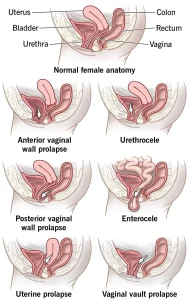
Pelvic Organ Prolapse is a condition in which one or more pelvic organs drop or press into the vaginal canal due to weakened or stretched pelvic floor muscles and supporting tissues. The organs that may be affected include the bladder, uterus, rectum, or small intestine. These organs normally stay in place with the support of muscles, ligaments, and connective tissues in the pelvis.
When these supporting structures become weak or damaged, the organs can shift downward and create a bulge in the vagina. Pelvic Organ Prolapse is more common in women who have had multiple vaginal deliveries, are older, or have conditions that place repeated pressure on the pelvic floor. The condition can range from mild to severe and may affect daily comfort and quality of life.
Symptoms
The symptoms of Pelvic Organ Prolapse vary depending on which organ is involved and how severe the prolapse is. Some women may have no symptoms, while others may experience noticeable discomfort.
Common symptoms include:
-
A feeling of pressure or heaviness in the pelvis
-
A bulge or lump in the vagina
-
Feeling as if something is falling out of the vagina
-
Lower back pain
-
Difficulty with urination, including leakage or trouble emptying the bladder
-
Constipation or difficulty with bowel movements
-
Discomfort or pain during sexual intercourse
-
Vaginal bleeding or discharge in some cases
Symptoms may become more noticeable after standing for long periods or during physical activity.
Causes
Pelvic Organ Prolapse develops when the muscles and tissues supporting the pelvic organs weaken or become stretched. This weakening reduces the ability of the pelvic floor to hold the organs in their normal position.
Common causes include:
-
Pregnancy and vaginal childbirth
-
Aging and natural weakening of pelvic tissues
-
Decreased estrogen levels after menopause
-
Chronic coughing that increases pressure on the pelvic floor
-
Obesity
-
Frequent heavy lifting
-
Long-term constipation and straining during bowel movements
These factors can gradually weaken the pelvic floor and lead to prolapse.
Risk Factors
Several factors can increase the likelihood of developing Pelvic Organ Prolapse.
These include:
-
Multiple vaginal deliveries
-
Aging and menopause
-
Family history of pelvic floor disorders
-
Obesity
-
Chronic constipation
-
Chronic coughing caused by lung disease or smoking
-
Previous pelvic surgery
Women with these risk factors may be more prone to weakening of the pelvic floor muscles.
Complications
If Pelvic Organ Prolapse becomes severe or remains untreated, it may lead to complications that affect urinary, bowel, and sexual function.
Possible complications include:
-
Urinary incontinence or leakage
-
Difficulty emptying the bladder
-
Recurrent urinary tract infections
-
Chronic constipation
-
Ulcers or irritation in the vaginal tissues
-
Pain during sexual intercourse
-
Reduced quality of life due to discomfort
Medical evaluation and treatment can help manage symptoms and prevent worsening of the condition.
Prevention
Although Pelvic Organ Prolapse cannot always be prevented, certain measures can help strengthen the pelvic floor and reduce the risk.
Preventive measures may include:
-
Performing regular pelvic floor exercises such as Kegel exercises
-
Maintaining a healthy body weight
-
Avoiding heavy lifting when possible
-
Treating chronic cough promptly
-
Preventing and managing constipation
-
Staying physically active to support muscle strength
-
Seeking medical advice after childbirth to support pelvic recovery
Strengthening the pelvic floor and maintaining healthy lifestyle habits can help protect pelvic support and reduce the likelihood of prolapse.
Advertisement
