
Overview
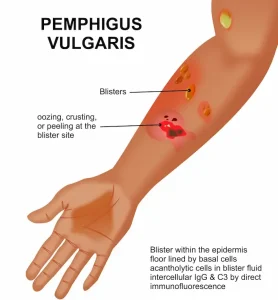
Pemphigus is a rare autoimmune skin disorder that causes painful blisters and sores on the skin and mucous membranes. It occurs when the immune system mistakenly attacks healthy skin cells, leading to the separation of skin layers and the formation of fragile blisters. These blisters can easily break, leaving open sores that may become painful and prone to infection.
Pemphigus most commonly affects middle-aged or older adults, although it can occur at any age. The condition often begins in the mouth before spreading to the skin or other mucous membranes such as those in the nose, throat, eyes, or genitals. Without proper treatment, pemphigus can become serious, but modern therapies can help control the disease and improve quality of life.
Symptoms
The main symptom of pemphigus is the development of blisters on the skin or mucous membranes. These blisters are typically soft, fragile, and may break easily.
Common symptoms include:
-
Painful blisters on the skin
-
Blisters or sores inside the mouth
-
Raw or peeling skin
-
Painful open sores after blisters break
-
Difficulty eating or swallowing when mouth sores are present
-
Burning or itching sensation on affected skin
-
Skin that easily peels when rubbed
The blisters may appear on the scalp, face, chest, back, or other parts of the body.
Causes
Pemphigus is caused by an autoimmune reaction in which the immune system produces antibodies that attack proteins responsible for holding skin cells together. When these proteins are damaged, the skin cells separate and form blisters.
Although the exact reason this immune reaction occurs is not fully understood, several factors may contribute to triggering the disease.
Possible triggers include:
-
Genetic susceptibility
-
Certain medications
-
Viral infections
-
Environmental factors
-
Immune system abnormalities
In many cases, the exact trigger for the autoimmune response cannot be identified.
Risk Factors
Several factors may increase the risk of developing pemphigus.
These include:
-
Middle age or older age
-
Family history of autoimmune disorders
-
Certain ethnic backgrounds, such as Mediterranean, Middle Eastern, or Jewish ancestry
-
Use of specific medications that may trigger autoimmune reactions
-
Other autoimmune diseases
Having these risk factors does not guarantee that a person will develop the condition, but it may increase the likelihood.
Complications
If pemphigus is not treated, it can lead to serious complications because the skin acts as an important protective barrier for the body.
Possible complications include:
-
Skin infections
-
Fluid loss from open sores
-
Severe pain or discomfort
-
Difficulty eating due to mouth sores
-
Malnutrition or weight loss
-
Scarring or skin discoloration
-
Increased risk of widespread infection
Proper treatment and careful wound care can help prevent many of these complications.
Prevention
There is no known way to prevent pemphigus because it results from an autoimmune response that cannot be easily predicted. However, certain measures may help reduce the risk of flare-ups or complications.
Helpful preventive approaches may include:
-
Avoiding medications that may trigger the condition when possible
-
Protecting the skin from injury or irritation
-
Maintaining good oral hygiene if mouth sores are present
-
Following prescribed treatments carefully
-
Seeking early medical care when new blisters or sores appear
-
Maintaining regular medical follow-up to monitor the condition
Early diagnosis and appropriate treatment are important for managing symptoms and preventing complications associated with pemphigus.
Advertisement
