
Overview
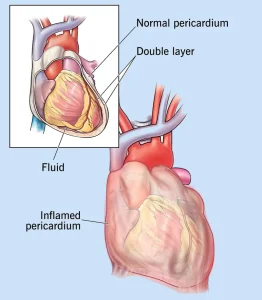
Pericarditis is an inflammation of the pericardium, the thin, two-layered sac that surrounds the heart. The pericardium protects the heart and helps it function smoothly as it beats. When this sac becomes inflamed, it can cause chest pain and other symptoms that may resemble those of a heart attack.
Pericarditis can occur suddenly and last for a short period, which is known as acute pericarditis. In some cases, the inflammation may persist or recur over time. The condition can affect people of all ages, and while many cases are mild and resolve with treatment, severe cases may lead to complications if not properly managed.
Symptoms
The most common symptom of pericarditis is chest pain, which may feel sharp or stabbing. The pain often occurs behind the breastbone and may spread to the neck, shoulders, or back.
Common symptoms include:
-
Sharp chest pain that may worsen when lying down or taking deep breaths
-
Chest pain that improves when sitting up or leaning forward
-
Shortness of breath
-
Fever
-
Fatigue or weakness
-
Heart palpitations
-
Dry cough
-
Swelling in the abdomen or legs in some cases
Symptoms can vary depending on the cause and severity of the inflammation.
Causes
Pericarditis can be caused by a variety of conditions that lead to inflammation of the pericardium. In many cases, the exact cause is not clearly identified.
Common causes include:
-
Viral infections, which are the most frequent cause
-
Bacterial infections
-
Fungal infections
-
Heart attack or damage to heart tissue
-
Autoimmune diseases such as lupus or rheumatoid arthritis
-
Kidney failure
-
Chest injuries or trauma
-
Certain medications
-
Cancer that spreads to the pericardium
Sometimes the condition develops without a known cause and is referred to as idiopathic pericarditis.
Risk Factors
Several factors may increase the risk of developing pericarditis.
These include:
-
Recent viral infection
-
History of heart attack
-
Autoimmune diseases
-
Kidney failure
-
Chest injury or recent heart surgery
-
Certain medications that may trigger inflammation
Although these factors may increase the risk, pericarditis can also occur in people without obvious risk factors.
Complications
If pericarditis is severe or long-lasting, it can lead to complications affecting the heart.
Possible complications include:
-
Pericardial effusion, which is fluid buildup around the heart
-
Cardiac tamponade, a serious condition that compresses the heart
-
Chronic or recurrent pericarditis
-
Constrictive pericarditis, in which the pericardium becomes thickened and restricts heart function
-
Reduced heart pumping ability
Early diagnosis and proper treatment can help prevent these complications.
Prevention
Preventing pericarditis mainly involves managing underlying conditions that may lead to inflammation of the pericardium.
Preventive measures may include:
-
Treating infections promptly
-
Managing autoimmune diseases effectively
-
Following medical advice after heart surgery or heart attack
-
Avoiding medications that may trigger inflammation if previously affected
-
Maintaining overall heart health through regular exercise, a balanced diet, and routine medical checkups
Seeking medical attention for persistent chest pain or other heart-related symptoms can help ensure early diagnosis and treatment.
Advertisement
