
Overview
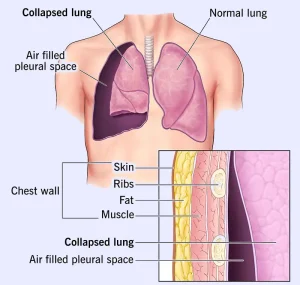
Pneumothorax is a condition in which air leaks into the space between the lung and the chest wall. This space, known as the pleural space, normally contains only a small amount of fluid that allows the lungs to move smoothly during breathing. When air enters this space, it can cause the lung to collapse partially or completely.
Pneumothorax can occur suddenly and may cause sharp chest pain and difficulty breathing. The condition can result from chest injury, lung disease, or may occur spontaneously without a clear cause.
The severity of pneumothorax varies. Small cases may resolve on their own, while larger or severe cases may require medical treatment to remove the air and allow the lung to expand again.
Symptoms
Symptoms of pneumothorax often develop suddenly and may vary depending on the size of the lung collapse.
Common symptoms include:
-
Sudden sharp chest pain
-
Shortness of breath
-
Rapid breathing
-
Chest tightness
-
Fatigue
-
Rapid heart rate
In severe cases, symptoms may include low oxygen levels, bluish skin color, or severe breathing difficulty.
Causes
Pneumothorax occurs when air escapes from the lung and collects in the pleural space. This can happen for several reasons.
Common causes include:
-
Chest injuries such as broken ribs or penetrating wounds
-
Lung diseases such as chronic obstructive pulmonary disease or infections
-
Rupture of small air sacs on the surface of the lung
-
Medical procedures involving the chest
-
Mechanical ventilation in some hospital settings
In some individuals, pneumothorax may occur spontaneously without an obvious injury or lung disease.
Risk Factors
Certain factors may increase the likelihood of developing pneumothorax.
Risk factors include:
-
Smoking
-
Being tall and thin, especially in young adults
-
Existing lung diseases
-
Previous pneumothorax
-
Chest trauma
-
Certain medical procedures involving the lungs
People with underlying lung conditions may have a higher risk of recurrence.
Complications
If not treated promptly, pneumothorax can lead to serious complications.
Possible complications include:
-
Complete collapse of the lung
-
Low oxygen levels in the blood
-
Recurrence of pneumothorax
-
Infection in the pleural space
-
Tension pneumothorax, a life-threatening condition where pressure builds in the chest
Tension pneumothorax requires immediate emergency treatment.
Prevention
Preventing pneumothorax may not always be possible, especially in spontaneous cases. However, certain measures may reduce the risk.
Preventive steps include:
-
Avoiding smoking
-
Managing existing lung diseases properly
-
Following safety precautions to prevent chest injuries
-
Seeking medical care for persistent chest pain or breathing problems
-
Following medical advice after a previous pneumothorax to reduce the chance of recurrence
Early recognition and prompt treatment can help prevent severe complications and improve recovery.
Advertisement
