
Overview
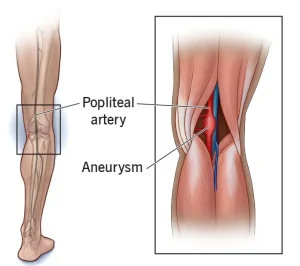
A popliteal artery aneurysm is an abnormal dilation of the popliteal artery, which runs behind the knee. It is the most common peripheral arterial aneurysm and usually occurs in older adults, often associated with atherosclerosis. While some aneurysms may remain asymptomatic, they can pose serious risks, including blood clots, limb ischemia, or rupture if left untreated.
Symptoms
Many popliteal artery aneurysms are asymptomatic and discovered incidentally, but when symptoms occur, they may include:
-
Pulsating swelling behind the knee
-
Pain or aching in the knee or calf
-
Numbness or tingling in the lower leg or foot
-
Cold or pale foot due to reduced blood flow
-
Skin discoloration or ulcers in severe cases
Causes
Popliteal artery aneurysms are often linked to underlying vascular conditions:
-
Atherosclerosis, the buildup of fatty deposits in artery walls
-
Genetic predisposition to aneurysms
-
Connective tissue disorders, such as Marfan syndrome or Ehlers-Danlos syndrome
-
Trauma or injury to the artery
Risk factors
Factors that increase the likelihood of developing a popliteal artery aneurysm include:
-
Age over 60
-
Male gender, as men are more commonly affected
-
Smoking or history of tobacco use
-
High blood pressure and high cholesterol
-
Family history of aneurysms or peripheral vascular disease
-
Presence of other aneurysms, particularly in the abdominal aorta
Complications
If untreated, popliteal artery aneurysms can lead to serious complications:
-
Blood clots (thrombosis) causing sudden limb ischemia
-
Embolism, where a clot travels and blocks smaller arteries
-
Rupture of the aneurysm, leading to severe bleeding
-
Chronic pain or ulceration in the lower limb
-
Limb loss in severe cases due to compromised blood flow
Prevention
While not all aneurysms can be prevented, steps to reduce risk and monitor vascular health include:
-
Regular vascular checkups, especially for those with risk factors
-
Controlling blood pressure and cholesterol levels
-
Avoiding smoking and managing other cardiovascular risks
-
Screening for aneurysms if there is a family history or presence of other aneurysms
-
Prompt evaluation of leg swelling, pain, or unusual pulses behind the knee
Early detection and management of popliteal artery aneurysms can prevent life-threatening complications and preserve limb function.
Advertisement
