
Overview
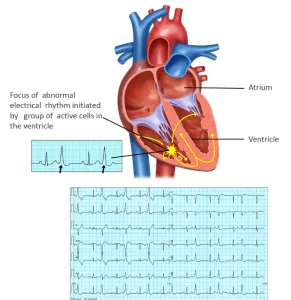
Premature Ventricular Contractions (PVCs) are extra heartbeats that begin in the heart’s lower chambers, known as the ventricles. These early beats disrupt the normal heart rhythm and are usually followed by a brief pause before the next regular heartbeat. Many people experience PVCs occasionally, and in most cases they are harmless.
PVCs can occur in individuals with or without underlying heart disease. They may be felt as a skipped heartbeat, fluttering sensation, or a stronger-than-normal heartbeat. While occasional PVCs are common and typically not dangerous, frequent or persistent PVCs may require medical evaluation.
In some cases, PVCs may be linked to stress, stimulants, or certain health conditions. Doctors usually diagnose PVCs through heart monitoring tests such as an electrocardiogram. Treatment depends on the frequency of the PVCs, the symptoms, and whether an underlying heart condition is present.
Symptoms
Many people with premature ventricular contractions do not notice any symptoms. When symptoms occur, they usually relate to changes in the heart’s rhythm.
Possible symptoms include:
-
Sensation of skipped or missed heartbeats
-
Fluttering in the chest
-
Pounding or strong heartbeat
-
Brief pauses between heartbeats
-
Dizziness or lightheadedness
-
Fatigue or mild weakness
In rare cases, frequent PVCs may lead to more noticeable symptoms such as shortness of breath or chest discomfort.
Causes
Premature ventricular contractions occur when an electrical signal in the ventricles triggers an early heartbeat. This interrupts the normal rhythm controlled by the heart’s natural pacemaker.
Common causes or triggers include:
-
Stress or anxiety
-
Excess caffeine consumption
-
Alcohol use
-
Tobacco or nicotine
-
Certain medications, such as decongestants or stimulants
-
Electrolyte imbalances
-
Lack of sleep or fatigue
PVCs may also occur in people with heart conditions such as coronary artery disease or cardiomyopathy.
Risk Factors
Several factors can increase the likelihood of experiencing premature ventricular contractions.
These include:
-
High intake of caffeine or energy drinks
-
Smoking or nicotine use
-
High levels of emotional stress
-
Existing heart disease
-
High blood pressure
-
Electrolyte imbalances such as low potassium or magnesium
-
Stimulant medications or recreational drugs
People with structural heart problems may be more likely to develop frequent PVCs.
Complications
Most PVCs are harmless and do not lead to serious health problems. However, when they occur very frequently or are associated with heart disease, complications may develop.
Possible complications include:
-
Persistent irregular heart rhythm
-
Reduced heart pumping efficiency
-
Development of other types of arrhythmias
-
Cardiomyopathy caused by frequent PVCs in rare cases
Monitoring and medical evaluation are important if symptoms are severe or occur frequently.
Prevention
While PVCs cannot always be prevented, certain lifestyle changes may help reduce their occurrence and support heart health.
Helpful preventive measures include:
-
Limiting caffeine and energy drink consumption
-
Avoiding smoking and tobacco products
-
Reducing alcohol intake
-
Managing stress through relaxation techniques
-
Getting enough sleep and rest
-
Maintaining balanced electrolyte levels through a healthy diet
-
Managing existing heart conditions under medical supervision
Regular medical checkups can help detect abnormal heart rhythms early and ensure proper treatment when necessary.
Advertisement
