
Overview
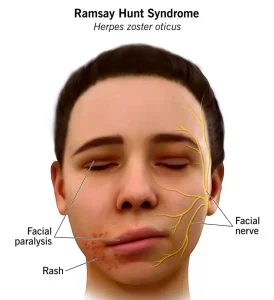
Ramsay Hunt syndrome is a neurological disorder caused by reactivation of the varicella-zoster virus, the same virus responsible for chickenpox and shingles. It occurs when the virus reactivates in the facial nerve near the inner ear. The condition leads to facial paralysis and a painful rash involving the ear, face, or mouth. Ramsay Hunt syndrome is generally more severe than Bell’s palsy and may result in long-term complications if not treated promptly.
Ramsay Hunt Syndrome Symptoms
Symptoms often develop suddenly and can vary in severity.
-
Painful rash with fluid-filled blisters on the ear, ear canal, scalp, or mouth
-
Facial weakness or paralysis on one side
-
Ear pain that may be severe
-
Hearing loss on the affected side
-
Ringing in the ear
-
Vertigo and balance problems
-
Difficulty closing the eye
-
Changes in taste perception
-
Dry mouth and dry eyes
Ramsay Hunt Syndrome Causes
Ramsay Hunt syndrome is caused by reactivation of the varicella-zoster virus in the facial nerve.
-
Previous chickenpox infection allowing the virus to remain dormant
-
Reactivation of the virus due to weakened immunity
-
Viral inflammation affecting the facial and auditory nerves
-
Spread of infection to nearby sensory structures
Ramsay Hunt Syndrome Risk Factors
Certain factors increase the risk of developing Ramsay Hunt syndrome.
-
Older age, especially over 60 years
-
Weakened immune system due to illness or medications
-
Stress or physical trauma
-
Cancer or HIV infection
-
Use of immunosuppressive drugs
-
Lack of shingles vaccination
Ramsay Hunt Syndrome Complications
Without timely treatment, Ramsay Hunt syndrome can cause lasting complications.
-
Permanent facial muscle weakness
-
Chronic facial pain
-
Persistent hearing loss
-
Ongoing balance problems
-
Eye damage due to inability to close the eyelid
-
Postherpetic neuralgia
Ramsay Hunt Syndrome Prevention
Prevention focuses on reducing the risk of varicella-zoster virus reactivation.
-
Vaccination against shingles, especially in older adults
-
Prompt treatment of shingles symptoms
-
Maintaining a healthy immune system
-
Managing chronic illnesses effectively
-
Reducing stress and maintaining adequate rest
-
Seeking early medical care for facial weakness or ear rash
Early diagnosis and antiviral treatment significantly improve recovery outcomes and reduce the risk of long-term complications in Ramsay Hunt syndrome.
Advertisement
