
Overview
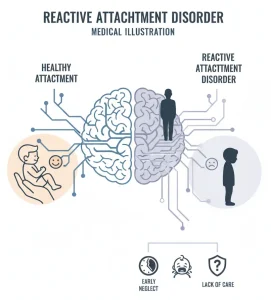
Reactive attachment disorder is a childhood mental health condition that affects a child’s ability to form healthy emotional bonds with caregivers. It develops when a child’s basic emotional and physical needs for comfort, affection, and consistent caregiving are not adequately met during early development. The disorder is most often seen in children who have experienced severe neglect, abuse, or frequent changes in caregivers, particularly during the first few years of life.
Reactive Attachment Disorder Symptoms
Symptoms usually appear in early childhood and affect emotional, social, and behavioral functioning.
-
Limited emotional responsiveness to others
-
Rarely seeking or responding to comfort when distressed
-
Minimal social interaction or withdrawal
-
Lack of positive affect such as smiling or joy
-
Unexplained irritability, sadness, or fearfulness
-
Difficulty trusting caregivers
-
Poor eye contact and reduced social engagement
Reactive Attachment Disorder Causes
Reactive attachment disorder results from disruptions in early bonding experiences.
-
Severe emotional or physical neglect
-
Repeated changes in primary caregivers
-
Institutional upbringing with limited individual care
-
Persistent lack of emotional responsiveness from caregivers
-
Early childhood abuse or trauma
-
Failure to meet basic needs for comfort and affection
Reactive Attachment Disorder Risk Factors
Several factors increase the risk of developing reactive attachment disorder.
-
Placement in orphanages or foster care settings
-
Prolonged separation from primary caregivers
-
Caregiver mental health problems or substance abuse
-
Extreme poverty affecting caregiving quality
-
Exposure to chronic stress or trauma in early life
-
Lack of stable, nurturing relationships
Reactive Attachment Disorder Complications
Without appropriate intervention, reactive attachment disorder can lead to long-term difficulties.
-
Impaired social relationships
-
Delayed emotional development
-
Behavioral problems
-
Learning difficulties
-
Increased risk of anxiety and mood disorders
-
Poor self-esteem
-
Difficulty forming trusting relationships later in life
Reactive Attachment Disorder Prevention
Prevention focuses on ensuring stable and nurturing caregiving environments.
-
Providing consistent, responsive caregiving in early childhood
-
Promoting secure attachment through emotional availability
-
Early identification of neglect or caregiving disruptions
-
Supporting caregivers with education and resources
-
Minimizing changes in caregivers when possible
-
Early mental health intervention for at-risk children
Early recognition and supportive interventions can significantly improve emotional and social outcomes for children with reactive attachment disorder.
Advertisement
