
Overview
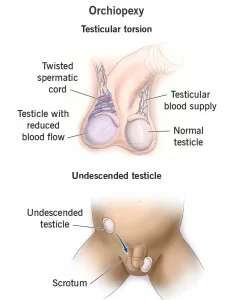
A retractile testicle is a condition in which one or both testicles move back and forth between the scrotum and the groin. The testicle can be manually guided into the scrotum during a physical exam and usually remains there temporarily. This condition is most commonly seen in infants and young boys and is generally considered benign. In many cases, the testicle descends permanently into the scrotum as the child grows.
Symptoms of Retractile Testicle
Retractile testicles often do not cause pain or discomfort, and symptoms may be subtle.
-
A testicle that appears to move in and out of the scrotum
-
One or both testicles not consistently visible in the scrotum
-
Normal testicle position during warm conditions and retraction during cold or stress
-
No associated pain in most cases
Causes of Retractile Testicle
The condition is mainly related to the activity of the cremaster muscle, which controls the movement of the testicle.
Common causes include:
-
An overactive cremaster muscle reflex
-
Normal developmental variation in young boys
-
Temporary response to cold temperatures, fear, or physical stimulation
Retractile testicle is not caused by structural abnormalities of the testicle itself.
Risk Factors for Retractile Testicle
Certain factors may increase the likelihood of a child having a retractile testicle.
-
Young age, particularly in infancy and early childhood
-
Strong cremasteric reflex
-
Family history of testicular positioning issues
-
Premature birth, in some cases
Complications of Retractile Testicle
Most retractile testicles do not lead to long-term problems, but monitoring is important.
-
Possibility of becoming an ascending or undescended testicle over time
-
Anxiety for parents due to changing testicle position
-
Rare risk of fertility issues if the testicle remains outside the scrotum for prolonged periods
Regular follow-up helps ensure early detection of potential complications.
Prevention of Retractile Testicle
There is no proven method to prevent a retractile testicle, as it is often related to normal muscle reflexes and development.
-
Routine pediatric check-ups to monitor testicle position
-
Parental awareness of changes in scrotal appearance
-
Early medical evaluation if the testicle cannot be guided into the scrotum
With proper observation and regular examinations, most cases of retractile testicle resolve naturally without the need for treatment.
Advertisement
