
Overview
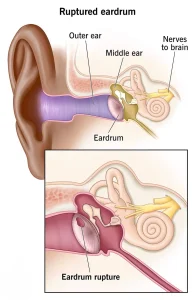
A ruptured eardrum, also known as a tympanic membrane perforation, is a tear or hole in the thin tissue that separates the ear canal from the middle ear. This condition can result from infection, trauma, or sudden pressure changes. While many cases heal on their own, a ruptured eardrum can cause pain, hearing loss, and increase the risk of middle ear infections.
Symptoms of Ruptured Eardrum
Symptoms may appear suddenly and vary in severity depending on the cause and size of the tear.
-
Sudden ear pain that may subside quickly
-
Drainage from the ear, which may be clear, bloody, or pus-like
-
Partial hearing loss in the affected ear
-
Ringing in the ear (tinnitus)
-
Vertigo or dizziness in some cases
-
Feeling of fullness or pressure in the ear
Causes of Ruptured Eardrum
A ruptured eardrum can occur due to various factors affecting the ear.
Common causes include:
-
Middle ear infections causing pressure buildup
-
Sudden loud noises or blasts (acoustic trauma)
-
Direct injury, such as inserting objects into the ear
-
Rapid changes in air or water pressure (barotrauma)
-
Head trauma or skull fractures
Risk Factors for Ruptured Eardrum
Certain factors increase the likelihood of experiencing a ruptured eardrum.
-
Frequent middle ear infections, especially in children
-
Swimming or diving in contaminated water
-
Exposure to loud noises or explosions
-
Use of cotton swabs or other objects in the ear canal
-
Recent upper respiratory infections
Complications of Ruptured Eardrum
If left untreated, a ruptured eardrum can lead to several complications.
-
Recurrent or chronic ear infections
-
Persistent hearing loss
-
Spread of infection to the middle ear bones or inner ear
-
Formation of cholesteatoma (abnormal skin growth in the middle ear)
Prevention of Ruptured Eardrum
Preventive measures focus on protecting the ear and treating underlying conditions promptly.
-
Avoid inserting objects into the ear canal
-
Protect ears from loud noises with earplugs
-
Manage ear infections promptly with medical care
-
Be cautious with diving or flying when experiencing congestion
-
Maintain good ear hygiene without over-cleaning
Most small ruptured eardrums heal naturally within a few weeks, but timely medical evaluation ensures proper management and prevents complications.
Advertisement
