
Overview
Sarcoidosis is an inflammatory disease characterized by the formation of small clusters of inflammatory cells called granulomas in various organs of the body. It most commonly affects the lungs and lymph nodes but can involve the skin, eyes, heart, liver, and other organs. The exact cause of sarcoidosis remains unknown, and its severity can range from mild to life-threatening.
In many cases, sarcoidosis resolves on its own without treatment. However, some individuals develop chronic disease that may lead to organ damage over time. Early diagnosis and monitoring are important to prevent long-term complications.
Symptoms
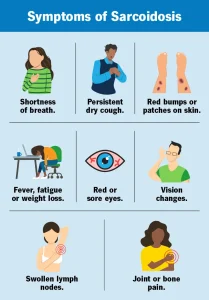
Symptoms of sarcoidosis vary depending on which organs are affected. Some people may not experience noticeable symptoms, while others develop persistent or progressive issues.
Common general symptoms include:
-
Fatigue
-
Fever
-
Swollen lymph nodes
-
Unexplained weight loss
Lung-related symptoms may include:
-
Persistent dry cough
-
Shortness of breath
-
Chest pain
Other possible symptoms depending on organ involvement:
-
Skin rashes or tender red bumps, especially on the legs
-
Blurred vision or eye pain
-
Irregular heartbeat or palpitations
-
Joint pain or swelling
Symptoms may develop gradually and can fluctuate over time.
Causes
The exact cause of sarcoidosis is not fully understood. It is believed to result from an abnormal immune response to an unknown trigger. This trigger may include environmental factors, infections, or exposure to certain substances in genetically susceptible individuals.
When the immune system overreacts, it leads to inflammation and the formation of granulomas in affected tissues. These granulomas can interfere with normal organ function if they accumulate or persist.
Risk Factors
Certain factors may increase the likelihood of developing sarcoidosis:
-
Age between 20 and 40 years
-
Family history of sarcoidosis
-
African or Northern European ancestry
-
Exposure to environmental irritants or infectious agents
Although these factors may increase risk, sarcoidosis can occur in individuals without any known risk factors.
Complications
While many cases are mild, sarcoidosis can cause serious complications if vital organs are affected.
Possible complications include:
-
Pulmonary fibrosis leading to permanent lung damage
-
Vision problems or blindness due to eye inflammation
-
Heart rhythm disturbances or heart failure
-
Kidney problems caused by abnormal calcium levels
-
Liver dysfunction
Long-term inflammation may lead to irreversible organ damage if not properly managed.
Prevention
There is no known way to prevent sarcoidosis because its exact cause is unknown. However, certain steps may help reduce potential triggers or complications:
-
Avoid exposure to environmental irritants such as dust and chemicals
-
Do not smoke
-
Maintain regular medical checkups if diagnosed
-
Follow prescribed treatment plans carefully
Early diagnosis and consistent medical monitoring can help manage symptoms and reduce the risk of long-term complications.
Advertisement
