
Overview
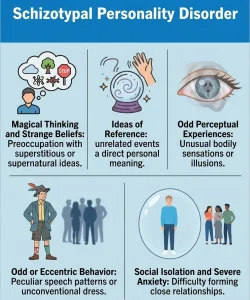
Schizotypal Personality Disorder and Schizoid Personality Disorder are not the same condition. Although both are classified as personality disorders and share some similarities such as social detachment, they have important differences in thinking patterns, behavior, and emotional expression.
Schizotypal Personality Disorder is part of the schizophrenia spectrum and involves unusual beliefs and perceptual experiences. Schizoid Personality Disorder primarily involves emotional coldness and a strong preference for solitary activities without the odd beliefs seen in schizotypal personality disorder.
Understanding the differences is important for accurate diagnosis and appropriate treatment.
Symptoms
While both disorders involve social withdrawal, their symptom patterns differ.
Schizotypal Personality Disorder symptoms may include:
-
Odd or magical thinking
-
Suspiciousness or mild paranoia
-
Unusual perceptual experiences
-
Eccentric behavior or appearance
-
Intense social anxiety
-
Limited close relationships
Schizoid Personality Disorder symptoms may include:
-
Strong preference for being alone
-
Little desire for close relationships
-
Emotional coldness or detachment
-
Limited emotional expression
-
Indifference to praise or criticism
-
Reduced interest in social or sexual relationships
The key difference is that schizotypal personality disorder includes unusual thoughts and perceptual distortions, while schizoid personality disorder does not.
Causes
The exact causes of both disorders are not fully understood. They are believed to result from a combination of genetic, biological, and environmental factors.
Schizotypal Personality Disorder has a stronger link to family history of schizophrenia spectrum disorders. Schizoid Personality Disorder may be influenced by early emotional detachment or temperamental traits such as extreme introversion.
Brain chemistry differences and early life experiences may contribute to the development of both conditions.
Risk Factors
Risk factors may overlap but are not identical.
Common risk factors include:
-
Family history of schizophrenia or personality disorders
-
Childhood trauma or neglect
-
Social isolation during early development
Schizotypal personality disorder has a stronger genetic association with schizophrenia compared to schizoid personality disorder.
Complications
Both disorders can lead to long-term social and functional challenges.
Possible complications include:
-
Social isolation
-
Difficulty maintaining employment in socially demanding roles
-
Co-occurring depression or anxiety
-
Reduced quality of life
Individuals with schizotypal personality disorder may also have an increased risk of developing psychotic disorders.
Prevention
There is no guaranteed way to prevent either disorder, particularly when genetic factors are involved. However, early recognition and mental health support can reduce symptom severity.
Helpful strategies include:
-
Early psychological evaluation for persistent social withdrawal or unusual beliefs
-
Counseling to improve communication and coping skills
-
Managing stress effectively
-
Supportive family and social environments
Although they share some similarities, schizotypal personality disorder and schizoid personality disorder are distinct conditions requiring different clinical approaches.
Advertisement
