
Overview
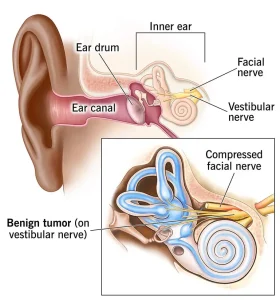
Schwannoma is a usually benign tumor that develops from Schwann cells, which are responsible for forming the protective covering around nerves called the myelin sheath. These tumors can occur along any peripheral nerve in the body but are most commonly found in the head, neck, and extremities. A well-known type is vestibular schwannoma, which affects the nerve responsible for hearing and balance.
Most schwannomas grow slowly and are non-cancerous. However, depending on their size and location, they may press on nearby nerves or tissues, leading to symptoms that require medical attention.
Symptoms
Symptoms of schwannoma vary depending on the affected nerve and tumor location. Many small tumors may not cause noticeable symptoms initially.
Common symptoms include:
-
A painless lump or swelling under the skin
-
Tingling or numbness in the affected area
-
Muscle weakness
-
Pain caused by pressure on nearby nerves
-
Hearing loss or ringing in the ears if located near the auditory nerve
-
Balance problems
Symptoms usually develop gradually as the tumor increases in size.
Causes
The exact cause of most schwannomas is unknown. They develop when Schwann cells grow abnormally and form a mass around a nerve.
In some cases, schwannomas are associated with genetic conditions such as neurofibromatosis type 2. Genetic mutations affecting nerve cell growth may contribute to tumor formation. However, many cases occur without any identifiable cause.
Risk Factors
Certain factors may increase the likelihood of developing schwannoma:
-
Genetic disorders such as neurofibromatosis type 2
-
Family history of nerve sheath tumors
-
Middle adulthood, as many cases are diagnosed between ages 20 and 50
Most schwannomas occur sporadically without clear risk factors.
Complications
Although schwannomas are typically benign, complications can occur depending on size and location.
Possible complications include:
-
Permanent nerve damage
-
Hearing loss or balance issues
-
Chronic pain
-
Weakness or loss of muscle control
-
Rarely, malignant transformation
Large tumors pressing on vital structures may require surgical removal to prevent long-term damage.
Prevention
There is no guaranteed way to prevent schwannoma, especially when genetic factors are involved. However, early detection can reduce the risk of complications.
Helpful preventive and management strategies include:
-
Regular medical checkups for individuals with genetic conditions
-
Early evaluation of persistent lumps or nerve-related symptoms
-
Monitoring known tumors for growth or changes
Prompt diagnosis and appropriate treatment, when necessary, help preserve nerve function and improve outcomes.
Request an appointment
Advertisement
