
Overview
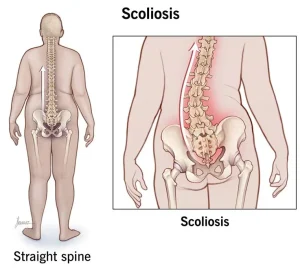
Scoliosis is a medical condition in which the spine curves sideways in an abnormal shape, often resembling an S or C when viewed from behind. While the spine naturally has curves when viewed from the side, scoliosis refers specifically to a sideways curvature. It most commonly develops during the growth spurt just before puberty.
Scoliosis can range from mild to severe. Mild cases may require only monitoring, while severe curves may need bracing or surgery. Early detection is important to prevent progression, especially in children and adolescents.
Symptoms
Symptoms of scoliosis vary depending on the severity of the spinal curve. Mild cases may not cause noticeable symptoms.
Common signs and symptoms include:
-
Uneven shoulders
-
One shoulder blade appearing more prominent
-
Uneven waist
-
One hip higher than the other
-
Leaning to one side
-
Back pain, especially in adults
-
Fatigue after prolonged standing or sitting
In severe cases, scoliosis can affect lung function if the curve restricts chest expansion.
Causes
In most cases, the exact cause of scoliosis is unknown. This type is called idiopathic scoliosis and is the most common form, particularly in adolescents.
Other possible causes include:
-
Congenital spinal abnormalities present at birth
-
Neuromuscular conditions such as cerebral palsy or muscular dystrophy
-
Spinal injuries or infections
-
Degenerative changes in the spine in older adults
The cause often determines the type and progression of the condition.
Risk Factors
Certain factors increase the likelihood of developing scoliosis:
-
Age, particularly during rapid growth in adolescence
-
Female gender, as girls are more likely to develop severe curves
-
Family history of scoliosis
-
Neuromuscular disorders
Early screening during school years can help identify scoliosis at an early stage.
Complications
If left untreated, scoliosis may lead to complications, especially in moderate to severe cases.
Possible complications include:
-
Chronic back pain
-
Reduced lung capacity
-
Visible spinal deformity
-
Emotional or psychological distress due to body image concerns
-
Limited physical activity in severe cases
Severe curvature may require surgical correction to prevent long-term complications.
Prevention
There is no guaranteed way to prevent idiopathic scoliosis because its exact cause is unknown. However, early detection can prevent worsening.
Helpful strategies include:
-
Routine physical examinations during childhood and adolescence
-
Early referral to a specialist if spinal curvature is suspected
-
Following recommended bracing or treatment plans
-
Maintaining strong core and back muscles through regular exercise
Timely medical evaluation and appropriate management can help control progression and support a healthy spine.
Advertisement
