
Overview
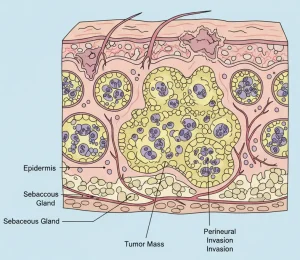
Sebaceous carcinoma is a rare and aggressive type of skin cancer that develops from sebaceous glands, which are oil-producing glands in the skin. It most commonly occurs around the eyes, particularly on the eyelids, but it can also appear on other areas of the body such as the face, neck, scalp, or trunk.
This cancer often grows slowly at first and may resemble benign conditions, which can delay diagnosis. Early detection and prompt treatment are important because sebaceous carcinoma has the potential to spread to nearby tissues and distant organs.
Symptoms
Symptoms of sebaceous carcinoma vary depending on the location and stage of the tumor.
Common symptoms include:
-
A painless, firm lump or nodule on the skin
-
Thickened or yellowish area on the eyelid
-
Persistent swelling or redness that does not improve
-
Recurrent lesion that looks like a chalazion or stye
-
Ulceration or bleeding in advanced cases
-
Loss of eyelashes when the eyelid is affected
-
Changes in skin texture around the lesion
Because symptoms may appear mild, the condition is often overlooked in its early stages.
Causes
Sebaceous carcinoma develops due to abnormal and uncontrolled growth of cells within sebaceous glands.
Contributing factors include:
-
Genetic mutations affecting cell growth regulation
-
Damage from ultraviolet radiation
-
Abnormal immune system function
In some cases, sebaceous carcinoma is associated with inherited conditions that increase cancer risk.
Risk Factors
Certain factors increase the likelihood of developing sebaceous carcinoma.
Risk factors include:
-
Older age
-
History of radiation therapy to the head or neck
-
Weakened immune system
-
Fair skin
-
Genetic syndromes associated with internal cancers
-
Previous skin cancers
The condition affects both men and women, with a slightly higher occurrence in older adults.
Complications
If not treated promptly, sebaceous carcinoma can lead to serious complications.
Possible complications include:
-
Local tissue destruction
-
Spread to nearby lymph nodes
-
Metastasis to distant organs
-
Vision problems when the eyelid is involved
-
Recurrence after treatment
-
Increased risk of additional cancers in some individuals
Regular follow-up is important due to the risk of recurrence.
Prevention
There is no guaranteed way to prevent sebaceous carcinoma, but certain measures may reduce risk and support early detection.
Preventive strategies include:
-
Protecting skin from excessive sun exposure
-
Using sunscreen and protective clothing
-
Monitoring skin and eyelids for new or changing lesions
-
Seeking medical evaluation for persistent eyelid lumps or skin changes
-
Attending regular skin examinations if at high risk
Early diagnosis, appropriate treatment, and ongoing monitoring play a key role in improving outcomes for individuals with sebaceous carcinoma.
Advertisement
