
Overview
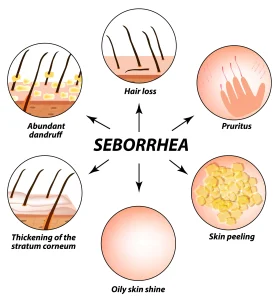
Seborrheic dermatitis is a common, chronic skin condition that causes red, inflamed skin with greasy or flaky scales. It most often affects areas of the body rich in oil-producing glands, such as the scalp, face, sides of the nose, eyebrows, ears, chest, and upper back. On the scalp, it is commonly known as dandruff.
The condition tends to wax and wane over time, with periods of improvement and flare-ups. While seborrheic dermatitis is not contagious or life-threatening, it can be uncomfortable and may affect self-confidence. With proper care and treatment, symptoms can usually be well controlled.
Symptoms
Symptoms of seborrheic dermatitis vary in severity and location.
Common symptoms include:
-
Red or inflamed skin
-
Greasy or oily patches
-
White or yellowish flaky scales
-
Itching or burning sensation
-
Scalp dandruff
-
Crusting or scaling around the hairline, eyebrows, ears, or nose
-
Patchy scaling on the chest or upper back
Symptoms may worsen during cold weather, stress, or periods of illness.
Causes
The exact cause of seborrheic dermatitis is not fully understood, but it is believed to result from a combination of factors.
Contributing causes include:
-
Overgrowth of a yeast that naturally lives on the skin
-
Increased oil production in the skin
-
Abnormal immune system response
-
Genetic predisposition
-
Environmental factors such as cold or dry weather
The condition is not caused by poor hygiene, though regular skin care can help manage symptoms.
Risk Factors
Certain individuals are more likely to develop seborrheic dermatitis.
Risk factors include:
-
Infancy and adulthood, especially between 30 and 60 years of age
-
Male sex
-
Family history of skin conditions
-
Stress or fatigue
-
Cold, dry climates
-
Weakened immune system
-
Neurological or psychiatric conditions
-
Chronic medical illnesses
Risk factors may influence the frequency and severity of flare-ups.
Complications
Seborrheic dermatitis is usually manageable, but complications can occur if the condition is severe or untreated.
Possible complications include:
-
Persistent itching and discomfort
-
Secondary skin infections from scratching
-
Thickened or darkened skin with long-term inflammation
-
Emotional distress or reduced self-esteem
Proper treatment helps minimize complications and improve quality of life.
Prevention
Seborrheic dermatitis cannot always be prevented, but certain measures can reduce flare-ups and control symptoms.
Preventive strategies include:
-
Washing affected areas regularly with gentle cleansers
-
Using medicated shampoos as recommended
-
Managing stress effectively
-
Avoiding harsh skin or hair products
-
Keeping skin clean and dry
-
Protecting skin from extreme cold or dryness
Consistent skin care and early treatment at the first signs of a flare-up can help keep seborrheic dermatitis under control.
Advertisement
