
Overview
Serotonin syndrome is a potentially serious condition caused by excessive levels of serotonin in the body. Serotonin is a chemical that helps regulate mood, digestion, and other important functions. When too much serotonin builds up, usually due to medications or drug interactions, it can overstimulate the nervous system. The condition can range from mild to life-threatening and requires prompt medical attention.
Symptoms
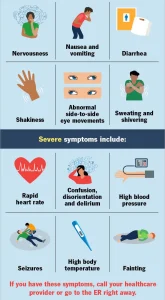
Symptoms of serotonin syndrome often develop quickly, sometimes within hours of taking a new medication or increasing a dose. They may affect the mind, muscles, and autonomic nervous system.
-
Mental changes such as agitation, restlessness, confusion, or anxiety
-
Muscle-related symptoms including tremors, muscle stiffness, twitching, or lack of coordination
-
Autonomic symptoms such as fever, sweating, rapid heart rate, high blood pressure, dilated pupils, nausea, or diarrhea
In severe cases, symptoms may progress to high fever, seizures, irregular heartbeat, or loss of consciousness.
Causes
Serotonin syndrome is most commonly caused by medications or substances that increase serotonin levels. It often occurs when multiple serotonergic drugs are taken together or when doses are increased too rapidly. Common triggers include certain antidepressants, migraine medications, pain medications, and some herbal supplements. Recreational drug use can also contribute to the condition.
Risk Factors
Certain factors increase the risk of developing serotonin syndrome.
-
Use of more than one medication that affects serotonin levels
-
Recent increase in dose of a serotonergic medication
-
Use of illicit drugs that influence serotonin activity
-
Drug interactions due to lack of medication review
-
Sensitivity to medications affecting the nervous system
Complications
If untreated, serotonin syndrome can lead to serious complications. These may include severe hyperthermia, muscle breakdown, kidney failure, and abnormal heart rhythms. In extreme cases, the condition can be fatal, especially if diagnosis and treatment are delayed.
Prevention
Prevention focuses on safe medication use and awareness of drug interactions. Patients should inform healthcare providers about all medications and supplements they are taking. Medications that affect serotonin should be started at appropriate doses and adjusted gradually under medical supervision. Seeking immediate medical care when new symptoms such as agitation, fever, or muscle stiffness develop can help prevent severe outcomes.
Advertisement
