
Overview
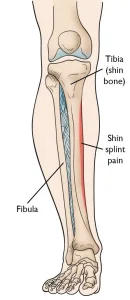
Shin splints is a common term used to describe pain along the inner edge of the shinbone, usually related to physical activity. It most often affects runners, athletes, and individuals who suddenly increase the intensity or duration of exercise. The pain is caused by stress on the bones, muscles, and connective tissues of the lower leg. Although shin splints are usually not serious, they can interfere with daily activities and athletic performance.
Symptoms
Symptoms of shin splints typically develop gradually and may worsen with continued activity.
-
Dull, aching pain along the front or inner part of the lower leg
-
Tenderness or soreness along the shinbone
-
Mild swelling in the lower leg
-
Pain that starts during exercise and may improve with rest
If ignored, the pain can become more persistent and occur even during normal walking.
Causes
Shin splints are caused by repetitive stress on the shinbone and surrounding tissues. Activities involving frequent running, jumping, or sudden changes in direction increase strain on the lower leg. Poor footwear, running on hard or uneven surfaces, and improper training techniques can contribute to the condition.
Risk Factors
Several factors increase the risk of developing shin splints.
-
Sudden increase in exercise intensity or duration
-
Flat feet or abnormal foot mechanics
-
Worn-out or inappropriate footwear
-
Running on hard or sloped surfaces
-
Weak or tight muscles in the lower leg
Complications
Most cases of shin splints improve with rest and proper care. However, continuing activity despite pain can lead to more serious conditions, such as stress fractures of the shinbone. Chronic pain and reduced physical performance may also occur if the condition is not properly managed.
Prevention
Prevention focuses on reducing stress on the lower legs. Gradually increasing activity levels, wearing proper supportive footwear, and using shock-absorbing surfaces can help. Stretching and strengthening exercises for the lower leg muscles improve flexibility and support. Resting when pain first appears and allowing adequate recovery time are key to preventing recurrence.
Advertisement
