
Overview
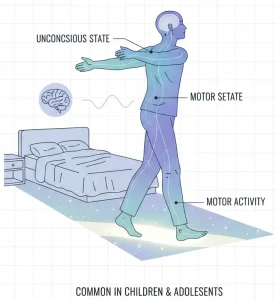
Sleepwalking is a sleep disorder in which a person gets up and walks or performs other activities while still asleep. It usually occurs during deep stages of non-dream sleep, most often in the first part of the night. Sleepwalking is more common in children and often resolves with age, but it can also affect adults. During an episode, the person may appear awake but is typically unaware of their actions and has little or no memory afterward.
Symptoms
Symptoms of sleepwalking can vary from mild to more complex behaviors.
-
Getting out of bed and walking around while asleep
-
Performing routine activities such as dressing or opening doors
-
Glassy-eyed or blank stare
-
Difficulty being awakened or comforted during an episode
-
Confusion or disorientation if awakened
-
Little or no recall of the event the next morning
In rare cases, complex or risky behaviors may occur.
Causes
Sleepwalking occurs when the brain partially awakens from deep sleep. The exact cause is not fully understood, but it is often related to factors that disrupt normal sleep patterns. These may include sleep deprivation, stress, fever, illness, or certain medications. In some cases, sleepwalking is associated with other sleep disorders.
Risk Factors
Several factors increase the likelihood of sleepwalking.
-
Childhood, especially between ages 4 and 12
-
Family history of sleepwalking
-
Lack of adequate sleep
-
High levels of stress or anxiety
-
Fever or illness
-
Use of medications that affect the nervous system
-
Alcohol use, particularly in adults
Complications
Most sleepwalking episodes are harmless, but complications can occur. Individuals may injure themselves by falling, bumping into objects, or leaving the house. Recurrent episodes can disrupt sleep quality and cause anxiety for family members. In adults, persistent sleepwalking may indicate an underlying sleep or medical condition.
Prevention
Prevention focuses on improving sleep quality and reducing triggers. Maintaining a consistent sleep schedule and ensuring adequate rest can help. Managing stress, avoiding alcohol before bedtime, and reviewing medications with a healthcare provider are important preventive steps. Creating a safe sleep environment by securing doors and removing hazards reduces the risk of injury. Medical evaluation is recommended if sleepwalking is frequent, severe, or begins in adulthood.
Advertisement
