
Overview
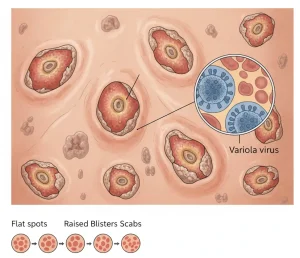
Smallpox was a highly contagious and life-threatening viral disease caused by the variola virus. It was characterized by fever and a distinctive skin rash that progressed to fluid-filled blisters and scabs. Smallpox spread easily from person to person and caused severe illness and death in many cases. Due to a successful global vaccination program, smallpox was officially declared eradicated worldwide in 1980.
Symptoms
Symptoms of smallpox developed in stages and were often severe.
-
High fever, chills, and severe fatigue
-
Headache and body aches
-
Back pain
-
Nausea and vomiting in some cases
-
Rash that began as flat red spots and progressed to raised bumps, blisters, and scabs
-
Scarring of the skin after healing
The rash usually appeared first on the face and spread to the arms, legs, and trunk.
Causes
Smallpox was caused by infection with the variola virus. The virus spread mainly through close, prolonged face-to-face contact via respiratory droplets. It could also spread through contact with contaminated bedding or clothing. Once infected, the virus multiplied in the body and triggered widespread inflammation and skin lesions.
Risk Factors
Before eradication, several factors increased the risk of smallpox infection.
-
Close contact with an infected person
-
Living in crowded or poorly ventilated conditions
-
Lack of immunity due to absence of vaccination
-
Weakened immune system
Today, the risk of naturally occurring smallpox infection no longer exists due to eradication.
Complications
Smallpox caused severe and often permanent complications. These included deep skin scarring, blindness due to eye involvement, and joint deformities. Many individuals developed severe infections of internal organs. The disease had a high mortality rate, especially among infants, pregnant individuals, and those with weakened immunity.
Prevention
Smallpox was prevented through widespread vaccination, which ultimately led to its global eradication. Routine vaccination is no longer required for the general population. Strict laboratory controls and international surveillance remain in place to prevent accidental or intentional release. The eradication of smallpox stands as one of the greatest achievements in public health history.
Request an appointment
Advertisement
