
Overview
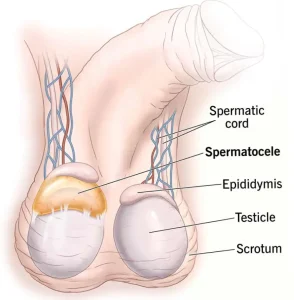
A spermatocele is a benign, fluid-filled cyst that develops in the epididymis, the small coiled tube located behind the testicle that stores and transports sperm. It is usually painless and noncancerous and is commonly discovered during a self-exam or routine physical examination. Spermatoceles are generally harmless and often do not require treatment unless they cause discomfort or grow large.
Symptoms
Many spermatoceles cause no symptoms and are found incidentally. When symptoms do occur, they may include:
-
A smooth, round lump near the top or behind the testicle
-
A feeling of heaviness or fullness in the scrotum
-
Mild discomfort or dull pain in the testicle or scrotum
-
Enlargement of the scrotum in some cases
The lump is usually separate from the testicle itself and does not affect sexual function.
Causes
The exact cause of spermatocele is not always clear. It is thought to result from blockage of small tubes within the epididymis, leading to the buildup of fluid that contains sperm. This blockage may develop due to inflammation, injury, or changes within the reproductive tract, although many cases occur without an identifiable cause.
Risk Factors
Spermatoceles can occur at any age but are more common in middle-aged and older men.
-
Increasing age
-
Prior inflammation or infection of the epididymis
-
History of scrotal injury or surgery
-
No strong lifestyle or genetic risk factors have been clearly identified
Complications
Spermatoceles are usually benign and do not lead to serious complications. They typically do not affect fertility. However, very large spermatoceles may cause discomfort or cosmetic concerns. Rarely, treatment or surgery can affect nearby structures, which may have implications for fertility.
Prevention
There is no known way to prevent spermatoceles. Regular testicular self-examinations help in early detection of any scrotal lumps and allow prompt medical evaluation to rule out more serious conditions. Seeking medical advice for new, enlarging, or painful scrotal masses ensures appropriate diagnosis and management.
Advertisement
