
Overview
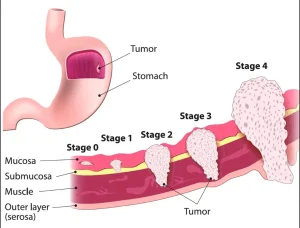
Stomach cancer, also known as gastric cancer, occurs when abnormal cells form in the lining of the stomach and grow uncontrollably. It often develops slowly over several years and may not cause noticeable symptoms in the early stages. Stomach cancer can spread to nearby organs, lymph nodes, or distant parts of the body if left untreated. Early detection significantly improves treatment outcomes.
Symptoms
Symptoms of stomach cancer can be subtle and often resemble common digestive issues. They include:
-
Persistent indigestion or heartburn
-
Stomach pain or discomfort
-
Nausea or vomiting, sometimes with blood
-
Loss of appetite or feeling full quickly
-
Unexplained weight loss
-
Fatigue or weakness
-
Swelling or fluid buildup in the abdomen
Symptoms usually worsen as the cancer progresses.
Causes
Stomach cancer arises from changes in the DNA of stomach cells, causing abnormal growth and division. These genetic changes may be influenced by factors such as chronic inflammation, infection, or exposure to certain environmental triggers. Helicobacter pylori infection, long-term inflammation of the stomach lining, and certain dietary habits are known contributors.
Risk Factors
Several factors increase the likelihood of developing stomach cancer:
-
Infection with Helicobacter pylori bacteria
-
Chronic gastritis or stomach inflammation
-
Smoking or tobacco use
-
Diet high in smoked, pickled, or salty foods
-
Family history of stomach cancer
-
Older age, typically over 50 years
-
Certain genetic conditions affecting the digestive tract
Having one or more risk factors does not guarantee the development of stomach cancer, but it increases susceptibility.
Complications
If stomach cancer is not treated, it can lead to serious complications, including:
-
Spread of cancer to lymph nodes, liver, lungs, or other organs
-
Obstruction of the stomach or digestive tract
-
Severe bleeding in the stomach
-
Malnutrition due to reduced appetite or difficulty eating
-
Weakness and fatigue from anemia or metabolic changes
Early diagnosis and treatment help prevent these complications.
Prevention
While not all stomach cancers can be prevented, certain measures may reduce risk:
-
Treating Helicobacter pylori infections promptly
-
Maintaining a healthy diet rich in fruits and vegetables
-
Avoiding smoking and excessive alcohol consumption
-
Regular medical checkups for those at high risk
-
Monitoring for early signs such as persistent stomach discomfort or unexplained weight loss
Healthy lifestyle habits and early detection play a critical role in reducing the impact of stomach cancer.
Advertisement
