
Overview
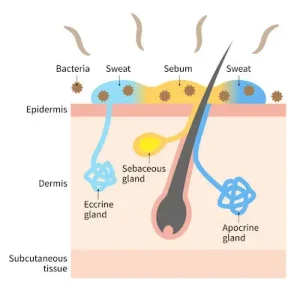
Sweating and body odor are natural processes of the body that help regulate temperature and remove certain substances through the skin. Sweat itself is mostly odorless, but body odor can develop when sweat comes into contact with bacteria on the skin. These bacteria break down sweat and produce substances that create an unpleasant smell.
The body contains two main types of sweat glands: eccrine glands and apocrine glands. Eccrine glands are found throughout the body and produce watery sweat to cool the body. Apocrine glands are located mainly in areas such as the underarms and groin, and the sweat from these glands can interact with bacteria to produce body odor.
While sweating is normal and necessary, excessive sweating or strong body odor may sometimes be related to lifestyle habits, hormonal changes, or certain medical conditions.
Symptoms
Symptoms related to sweating and body odor vary depending on the underlying cause and severity.
Common symptoms include:
-
Noticeable sweat on the skin or clothing
-
Unpleasant odor from areas such as the underarms or feet
-
Damp or moist skin, especially during warm weather or physical activity
-
Persistent sweating even in cool environments
-
Skin irritation or rash in areas with frequent sweating
Some individuals may experience excessive sweating that interferes with daily activities.
Causes
Sweating and body odor can occur for many reasons related to normal body functions or external factors.
Possible causes include:
-
Physical activity or exercise
-
Warm or humid weather
-
Stress, anxiety, or emotional reactions
-
Hormonal changes during puberty, pregnancy, or menopause
-
Certain foods such as garlic, onions, or spicy meals
-
Poor hygiene or infrequent bathing
-
Bacterial growth on the skin
-
Medical conditions that cause excessive sweating
Certain medications may also increase sweating or alter body odor.
Risk Factors
Some factors can increase the likelihood of noticeable sweating or body odor.
Risk factors include:
-
Hot and humid environments
-
Wearing tight or non-breathable clothing
-
Hormonal changes during adolescence
-
Obesity
-
Diet rich in strong-smelling foods
-
Certain medical conditions such as hyperhidrosis
-
Stress or anxiety
People who are physically active or spend long hours outdoors may also experience more sweating.
Complications
Sweating and body odor are usually harmless, but in some cases they may lead to minor complications.
Possible complications include:
-
Skin irritation or rashes due to constant moisture
-
Fungal or bacterial skin infections
-
Social discomfort or embarrassment
-
Reduced confidence or emotional stress
If sweating becomes excessive or persistent, medical evaluation may be helpful to rule out underlying conditions.
Prevention
Good hygiene and lifestyle habits can help reduce excessive sweating and body odor.
Preventive measures include:
-
Bathing regularly with soap and water
-
Using deodorants or antiperspirants
-
Wearing clean, breathable clothing made from natural fabrics
-
Changing clothes after heavy sweating or exercise
-
Keeping underarm and foot areas dry
-
Limiting foods that may contribute to strong body odor
-
Managing stress and anxiety
If sweating is excessive or difficult to control, a healthcare provider may recommend medical treatments or specialized products to manage the condition.
Advertisement
